Römerbrücke, Roman bridge site in Deutz, Germany
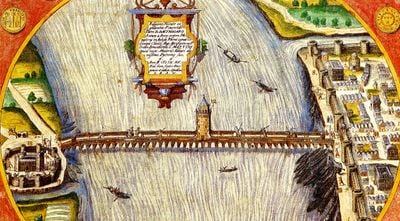
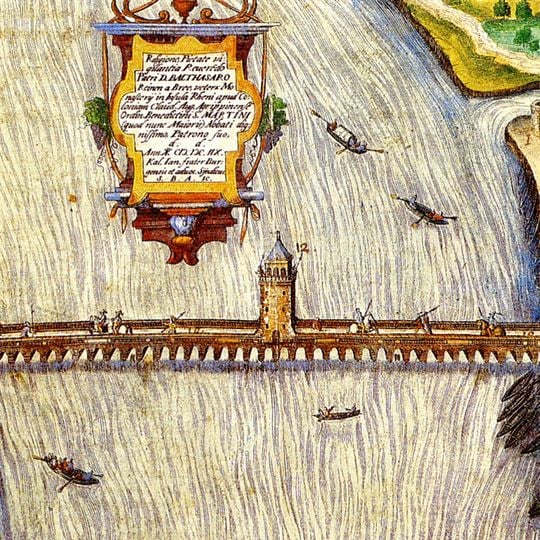
The Römerbrücke was a stone-pillared bridge with a wooden deck that crossed the Rhine in Cologne-Deutz, linking the Roman city on the west bank to a military fort on the east bank. The stone piers rested on oak piles driven into the riverbed to carry the weight of the structure above.
The bridge was built around 310 CE under Emperor Constantine I as part of a broader effort to secure the Rhine frontier. It remained in use for several centuries before floods and the decline of Roman power led to its eventual abandonment.
At the Romano-Germanic Museum, visitors can see actual stone blocks and wooden piles recovered from the riverbed, giving a direct sense of how the crossing was built. These objects show how central this connection was to daily life on both banks of the Rhine.
Nothing of the original bridge is visible above the Rhine today, as it lies completely beneath the riverbed. The Romano-Germanic Museum in the city center displays recovered finds and scale models that give a clear picture of what the structure looked like.
Divers have found individual oak piles in the Rhine riverbed that have survived for nearly 1700 years underwater. The wood was preserved because it was kept permanently submerged, which protected it from the air and decay.
The community of curious travelers
AroundUs brings together thousands of curated places, local tips, and hidden gems, enriched daily by 60,000 contributors worldwide.