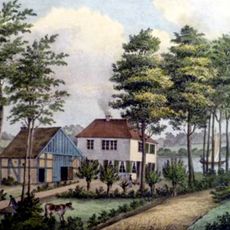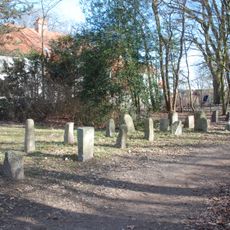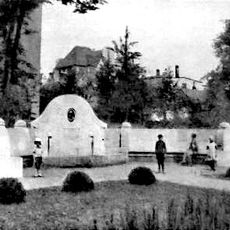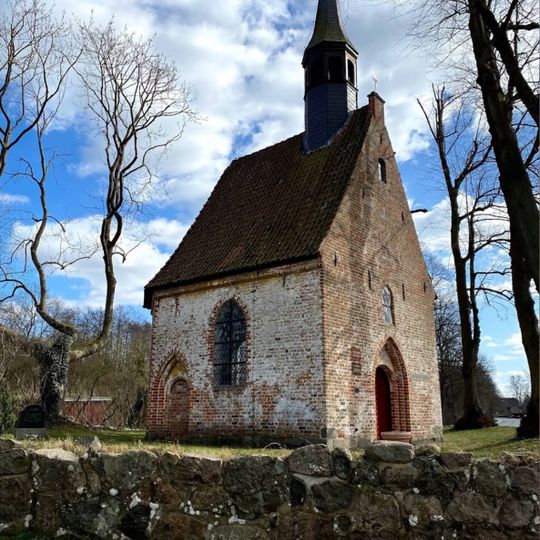
Siechenkapelle Klein-Grönau, building in Lübeck, Germany
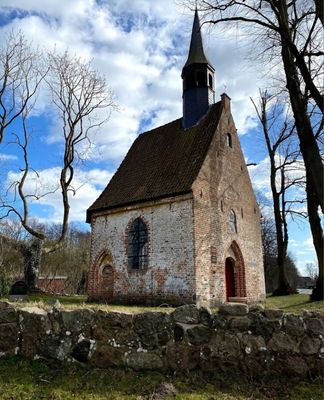
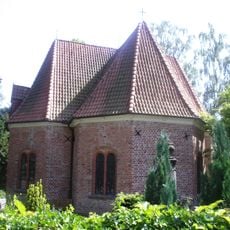
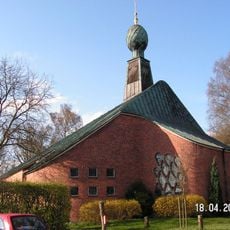
Siechenkapelle Klein-Grönau is a small rectangular stone chapel near Lübeck, originally constructed to serve people with leprosy. The modest structure measures roughly 20 feet (6 meters) wide by 30 feet (9 meters) long and features a distinctive curved window, a simple roof tower added in the 17th century, and interior furnishings from multiple periods including a 15th-century carved altar.
The chapel was founded around 1409 to serve as a place of worship for people with leprosy and was transferred to Lübeck in 1423 when the founding family's role ended. Over centuries, modifications were made including a new roof tower in 1659 and floor renewal in 1841, while a Flemish altar was added in 1709.
The chapel serves as a gathering place where the local Low German language, known as Plattdeutsch, is actively spoken during services held from spring through harvest season. This practice keeps regional traditions and oral heritage alive within the community.
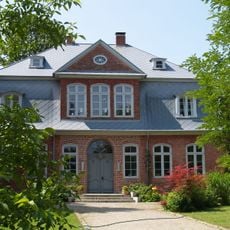
The chapel holds about 40 people and is most accessible during the warmer months when regular services are held, typically from spring through early fall. The site sits in a quiet area near restored historic buildings and works best as a short, contemplative visit.
The bell dating to 1659 remains in its small tower and can still be heard on special occasions, despite being less than half a meter across. This modest functioning bell connects visitors to sounds that have echoed from the same spot for centuries.
The community of curious travelers
AroundUs brings together thousands of curated places, local tips, and hidden gems, enriched daily by 90,839 contributors worldwide.