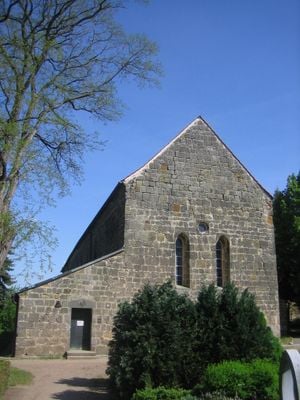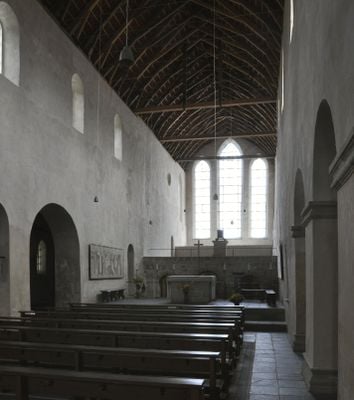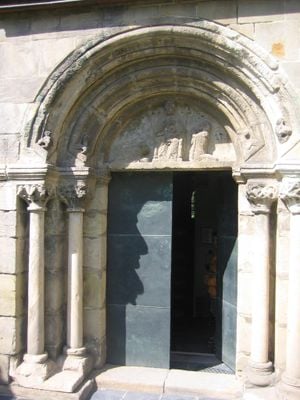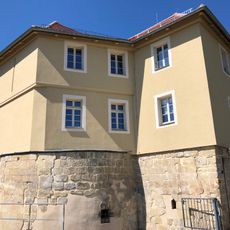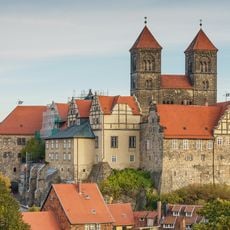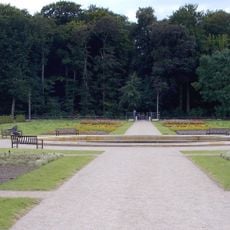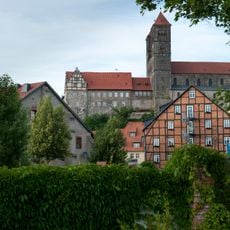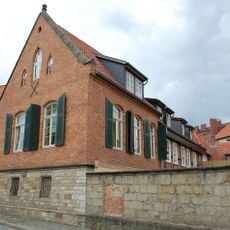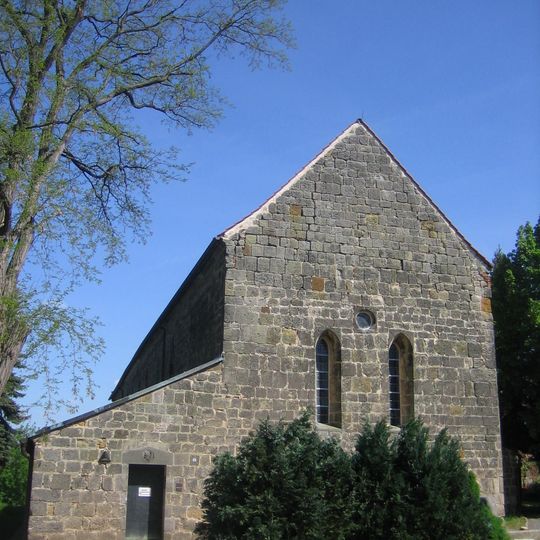
Kościół św. Wiperta w Quedlinburgu, Romanesque church at Castle Hill, Quedlinburg, Germany
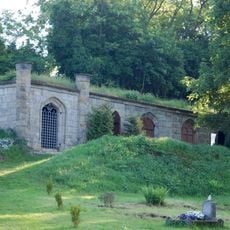
St.-Wiperti Church is a Romanesque house of worship on Castle Hill in Quedlinburg with thick walls and round arches typical of this building style. The church contains a stone crypt from the 10th century located beneath the main church.
The building was constructed during the time of Otto I in the 10th century and served as a royal site for Easter celebrations honoring his father Heinrich I. In 1146 it became a Premonstratensian monastery, and after the Reformation in 1547 it was converted to a Protestant parish church.
The church plays a role in the religious life of Quedlinburg, with its spaces used today for Catholic services and visits. Visitors can see how the different architectural styles reflect the various periods that shaped the building.
The church is open during summer months for Catholic services and offers visitors the chance to explore the medieval architecture. Guided tours are available and provide insight into the Romanesque structures and the historical development of the site.
In the 1930s the crypt was converted by the SS into a national socialist shrine, representing a dark chapter in the site's history. After World War II the building was reconsecrated in 1959 and restored to its original state.
The community of curious travelers
AroundUs brings together thousands of curated places, local tips, and hidden gems, enriched daily by 91,520 contributors worldwide.