Teschemacher Hof, human settlement in Germany
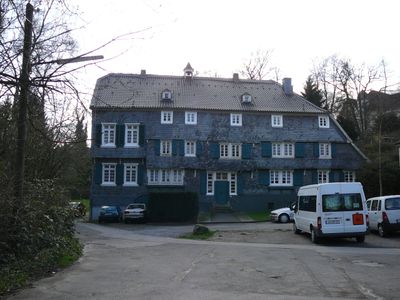
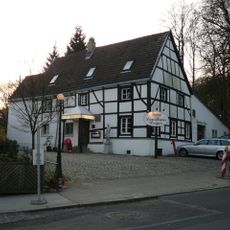
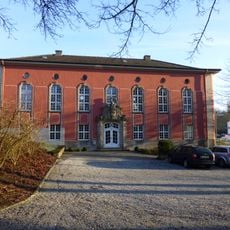
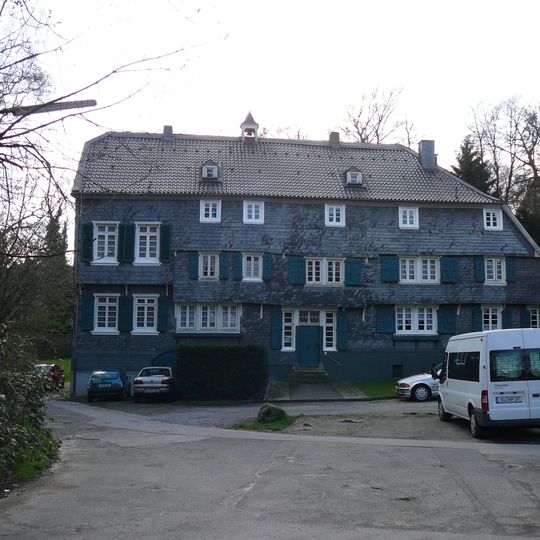
Teschemacher Hof is a timber-framed farm building in Wuppertal, constructed with wooden beams and clay bricks as one of the oldest residential buildings in the city. Its facade shows different materials on various sides, including exposed wooden beams and slate-covered sections that reflect different construction phases.
The building was constructed around 500 years ago, with tree-ring analysis dating its construction to approximately 1518 to before 1540. In 2019, the city and Renaissance AG acquired the property to preserve it through extensive renovation using natural materials.
The house bears the name of a family that once worked the farm and remains a symbol of the area's rural heritage. The exposed wooden beams and traditional construction methods show how people built and lived in this region centuries ago.
The building sits beside a meadow near the Mirke stream and is kept dry by a pump system, as the surrounding area tends to retain moisture. Access is possible, but note that restoration work is still ongoing and some areas may have limited accessibility.
Inside one apartment, handprints left by workers who built the house nearly 500 years ago remain visible in the clay, preserved behind glass for residents to see. The restoration also uncovered a Renaissance wall painting depicting the myth of Leda and the Swan, which was carefully cleaned by specialists.
The community of curious travelers
AroundUs brings together thousands of curated places, local tips, and hidden gems, enriched daily by 91,391 contributors worldwide.