Stauffenburg, Medieval castle ruin in Goslar, Germany.
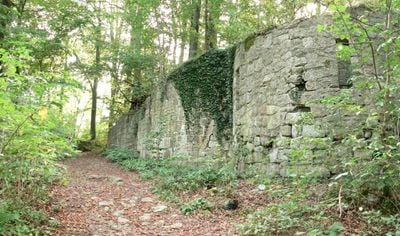
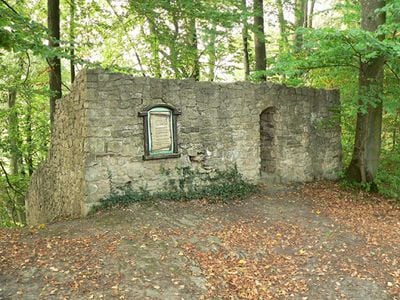
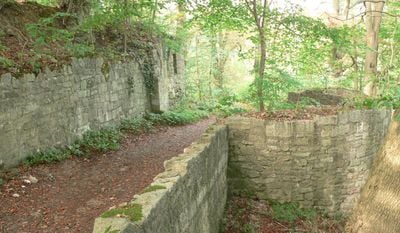
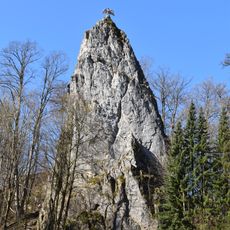
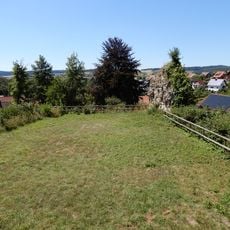
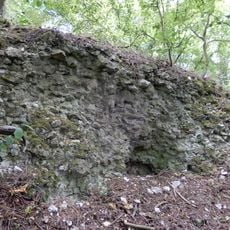
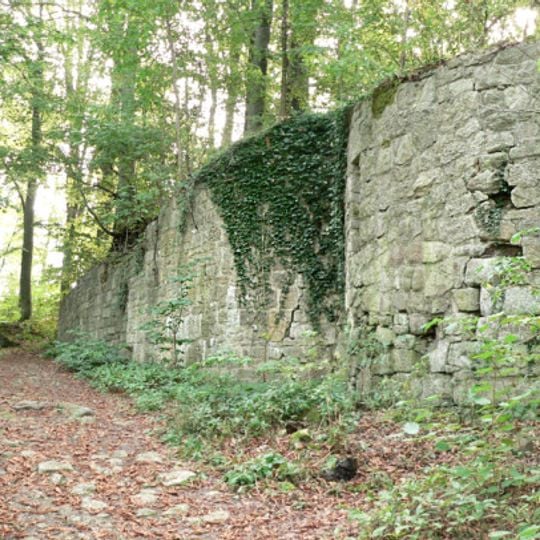
Stauffenburg is a castle ruin perched on a hillside in the Harz Mountains near Goslar, composed of stone walls and medieval foundations. The remains reveal the original layout of buildings and the multiple defensive levels of the fortress.
The first buildings are presumed to date from the 11th century, erected by the Counts of Katlenburg; the name Stauffenburg appears in a document of Henry the Lion in 1154. After Henry's fall in 1180 the castle passed to Emperor Frederick Barbarossa, and in 1193 to the Archbishopric of Magdeburg. It was never besieged; from the 18th century its stones were taken away for other buildings.
The ruins show building styles typical of medieval mountain fortresses and reveal how such structures were adapted to steep terrain. Walking through the site, you notice how the builders used the natural slope to strengthen their defensive position.
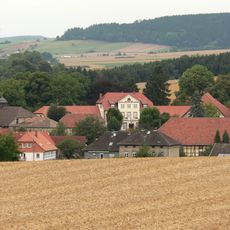
The ruin lies on the wooded Burgberg (346 m) about 3 km south-southwest of Münchehof, a district of Seesen, and about 2.8 km north-northwest of Gittelde. The old approach path is partly a sunken lane flanked in its upper section by rises that may have served as an outer defence. The B 243 runs about 1.6 km east of the site in the Markau valley.
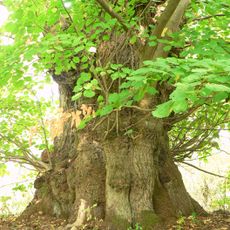
The Eva-Linde, an ancient lime tree named after Duke Henry the Younger's mistress Eva von Trott, stands beside the castle gate; only a stump about 2 m across remains, shown to the right of the castle on the 1654 Merian copper engraving. Eva von Trott faked her death in 1532 and lived hidden at Stauffenburg for nine years, bearing most of her ten children with the duke there.
The community of curious travelers
AroundUs brings together thousands of curated places, local tips, and hidden gems, enriched daily by 94,522 contributors worldwide.