Thaulow-Museum, Art museum in Kiel, Germany
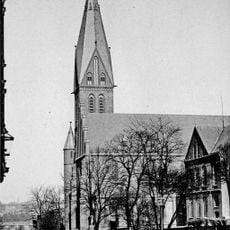
The Thaulow-Museum is an art museum in Kiel designed by Heinrich Moldenschardt in 1875 with Italian Renaissance architectural elements and red brick construction. A major expansion in 1911 quadrupled the exhibition space, allowing the display of more artworks and regional cultural objects.
The museum opened on 10 August 1878 after Gustav Ferdinand Thaulow, a philosophy professor at Kiel University, offered his collection to the province on condition that a new building be provided; the province agreed on 3 November 1875. The architect Heinrich Moldenschardt designed the brick building with Italian Renaissance elements. After the collections were evacuated to Ostholstein in 1940, they were moved from 1948 to Gottorf Castle in Schleswig, where the successor museum opened in 1950.
The museum's collection was arranged by style periods in period rooms, a concept that shaped its later identity as a Kunstgewerbe-Museum. Its founding aims combined Schleswig-Holstein cultural history, craft objects, and a teaching collection for Kiel University.
The museum no longer exists: the 1878 building stood at today's junction of Ziegelteich, Sophienblatt, Stresemannplatz and Andreas-Gayk-Straße, where the site was cleared in 1948 and later built over. The 1911 extension survived until 1970. The collections are now shown at Gottorf Castle in Schleswig, so plan a visit there rather than in Kiel.
Adelbert Matthaei, professor of art history at Kiel University, was key to acquiring the late-Gothic Landkirchener Retabel, an altarpiece from the circle of Bertram von Minden. The museum's 1911 extension, funded by the city and the provincial parliament, quadrupled the exhibition space to house such pieces.
The community of curious travelers
AroundUs brings together thousands of curated places, local tips, and hidden gems, enriched daily by 94,159 contributors worldwide.