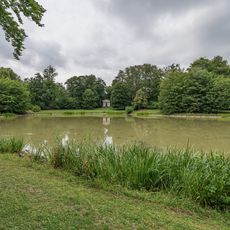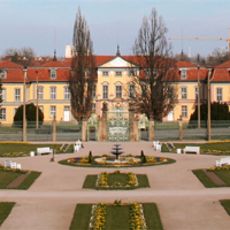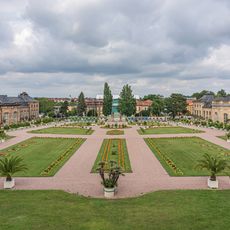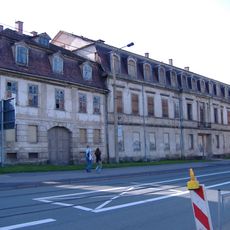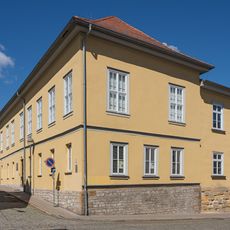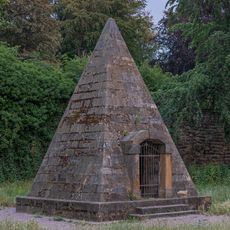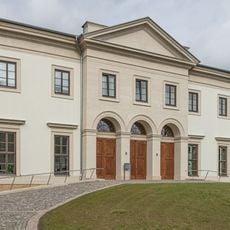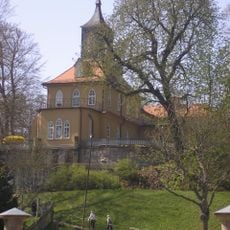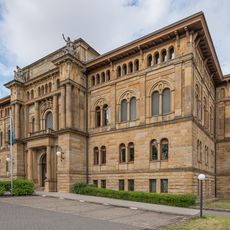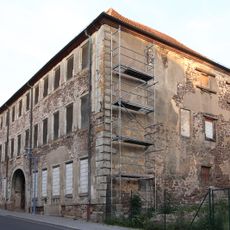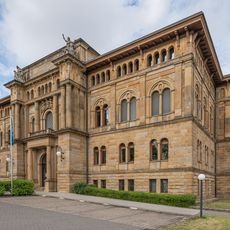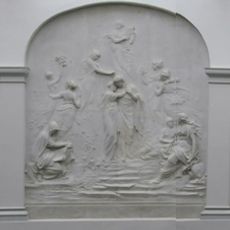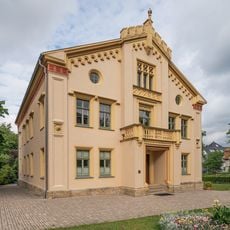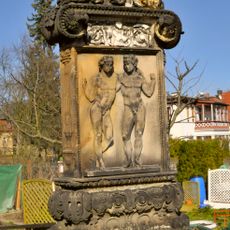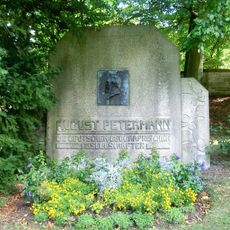
Gotha Observatory, Astronomical observatory in Gotha, Germany.
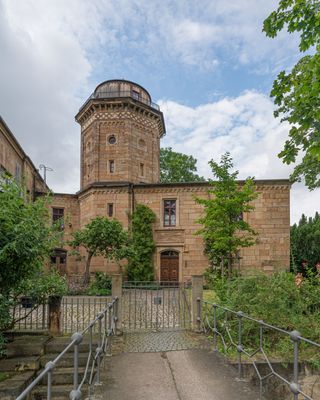
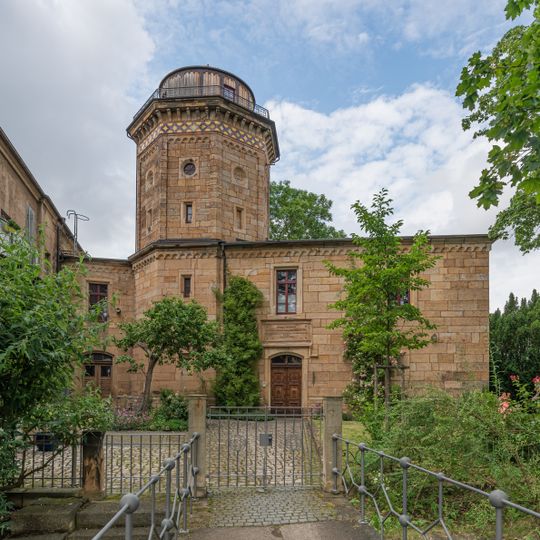
Gotha Observatory was an observatory facility with five sections on Seeberg hill, featuring a central rotating dome and two wings for staff accommodation. It was equipped with several instruments including an eighteen-inch quadrant, transit instruments, Hadley sextants, and a Gregorian reflector for astronomical measurement.
The observatory was financed and built in 1787 by Duke Ernest II of Saxe-Gotha-Altenburg, who appointed Franz Xaver von Zach as its first director. This founding marked the start of an important period for astronomical research in the region.
The location became known as a center where scientists from many countries gathered to share their work and observations. This made it an important place for European astronomers to connect and advance their field together.
The site is located on a hilltop and is best reached on foot after leaving the town center. Visitors should expect changing weather and wear sturdy shoes for the climb up to the summit.
The observatory used a Zöllner photometer as its only astrophysical measurement tool, relying heavily on traditional observation methods. This focus on classical techniques made it an interesting example of combining newer tools with established astronomical practices.
The community of curious travelers
AroundUs brings together thousands of curated places, local tips, and hidden gems, enriched daily by 92,657 contributors worldwide.