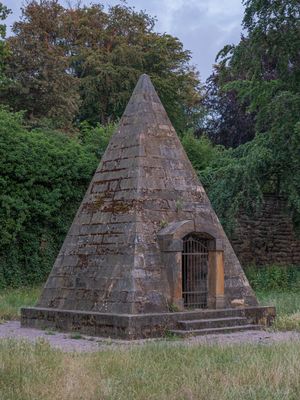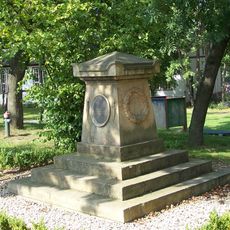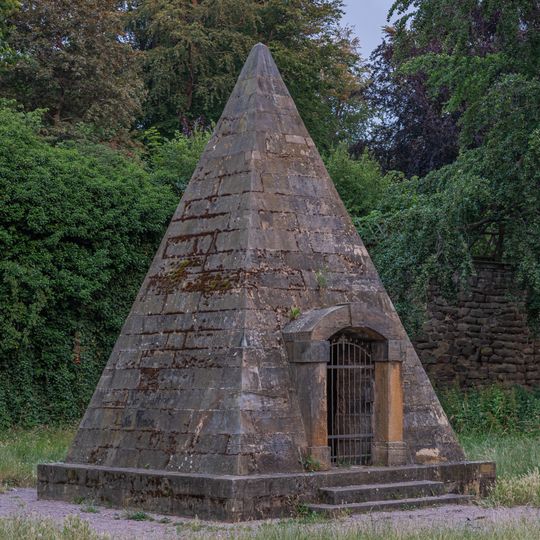
Studnitz Pyramid, Pyramid-shaped tomb near Ernestinum grammar school in Gotha, Germany.
The Studnitz Pyramid is a sandstone burial monument in central Gotha with a classical four-sided form and unadorned exterior surfaces. Its interior contains burial chambers designed to hold remains, and the structure showcases architectural proportions inspired by ancient precedents.
The monument was built after 1779 by Friedrich Wilhelm Döll, a student of French sculptor Jean Antoine Houdon, as a burial site for local court official Hans Adam von Studnitz. Its construction coincided with a broader European interest in pyramid-shaped tombs inspired by ancient Roman and Egyptian sources.
The monument bears the name of the person buried within, reflecting how such tombs served as permanent records of status and remembrance in their community. Visitors today see a structure that once represented fashionable European taste for ancient forms during the Classical era.
The monument sits in a central location and is reachable on foot, making it ideal for combining with other walks through town. Visitors can approach it from all sides, and the outdoor setting allows access during daylight hours throughout the year.
Original architectural drawings from the construction period survive and show precise plans for the interior sarcophagus and burial chamber layout. These documents reveal how carefully the geometric proportions were calculated before the monument was built.
The community of curious travelers
AroundUs brings together thousands of curated places, local tips, and hidden gems, enriched daily by 92,641 contributors worldwide.