Herzogliches Museum, Art museum at Schloss Friedenstein, Gotha, Germany
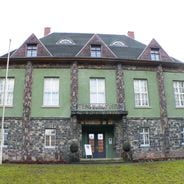
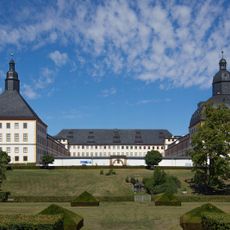
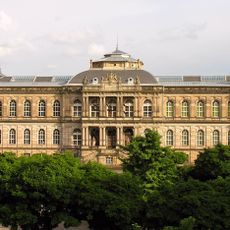
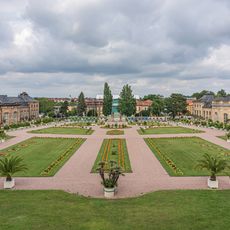
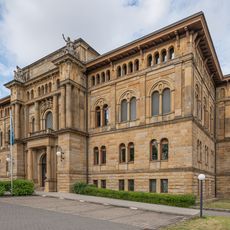
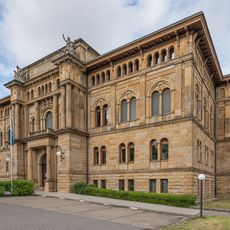
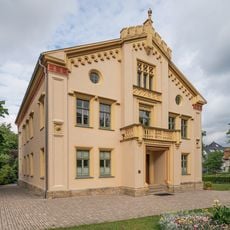
The Herzogliches Museum is a Neo-Renaissance museum building from the 19th century, standing in the Schlosspark south of and opposite Schloss Friedenstein in Gotha. It was designed by Vienna architect Franz von Neumann the Elder and opened on 17 April 1879. Its three floors hold Egyptian and Greco-Roman antiquities, Italian cork models of ancient buildings, sculptures, East Asian art, and paintings from Cranach to Caspar David Friedrich.
Duke Ernst II commissioned the museum in 1863, with the Landtag's consent, on condition of free Sunday admission. Vienna architect Franz von Neumann planned it on the former ducal kitchen garden south of Schloss Friedenstein; construction began in June 1864. Cost overruns halted work from 1870 to 1875, and Neumann was dismissed in 1878. The building opened on 17 April 1879, fifteen years after work began.
The collection reflects the dukes' collecting across centuries: an Egyptian collection counted among the earliest on the continent, Meissen and Asian porcelain, Japanese lacquer objects, and sculptures from Gothic to Neoclassical, with a notable group of Houdon works. Dutch and old German paintings hang alongside pieces by Lucas Cranach and Rubens.
The museum sits at the base of the castle grounds and is best reached on foot from the main palace. Visiting hours vary by season, so checking beforehand helps plan your visit more effectively.
The Gothaer Liebespaar, painted around 1480, is a double portrait of an unidentified couple and one of the earliest German panel paintings of its kind. The museum also keeps Italian cork models of ancient Roman buildings made in the 18th century, displayed in the basement alongside the Egyptian and classical antiquities.
The community of curious travelers
AroundUs brings together thousands of curated places, local tips, and hidden gems, enriched daily by 93,248 contributors worldwide.