Augustinerkirche Gotha, Medieval church building in Gotha, Germany.
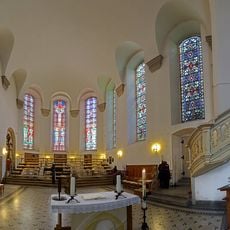
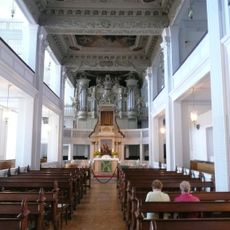
Augustinerkirche Gotha is a hall church with an elongated choir and no tower, built intentionally for a mendicant order. The interior layout maximizes open space for the congregation and lets light flood in from above through carefully positioned windows.
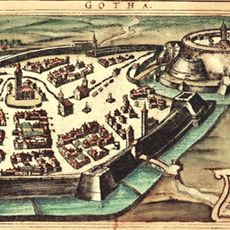
The site began in 1216 under Cistercian nuns and passed to Augustinian monks in 1258, who enlarged and rebuilt parts of the structure. This transition to a different order brought the changes that shaped how the complex looks today.
The church is also called Salvatorkirche, and its name recalls the Augustinian Hermits who took over the site in 1258, the order's first house in Thuringia. In the Fürstenloge, a stucco elephant recalls the Elephant Order awarded to Duke Heinrich I by the Danish king Christian I; putti hold ribbons with the duke's motto "Pietate prudentia et iustitia".
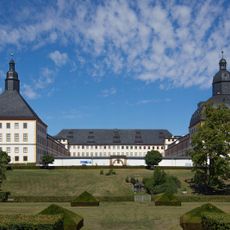
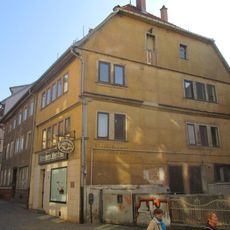
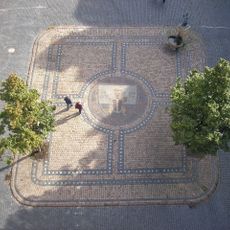
The church stands at Klosterplatz 6 in Gotha's old town, with the former Augustinian monastery adjoining it to the north. The Gothic cloister of 1366 is fully preserved and holds gravestones moved there in 1904 from the former Alter Gottesacker cemetery. The church interior was restored between 1991 and 1993.
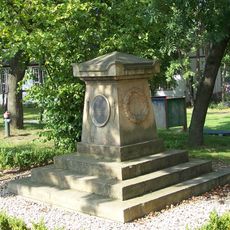
Most gravestones and epitaphs in the cloister were moved here in 1904 from the former Cemetery I, the Alter Gottesacker, between today's Bohnstedtstraße and Eisenacher Straße. One slab carries the Latin warning "Homo bulla, memento mori!" — man is a bubble, remember you must die. The stone of pedagogue Johann Georg August Galletti has its reverse side, turned to the wall, dedicated to his second wife Wilhelmine.
The community of curious travelers
AroundUs brings together thousands of curated places, local tips, and hidden gems, enriched daily by 94,458 contributors worldwide.