Vestisches Museum, Regional history museum in Recklinghausen, Germany.
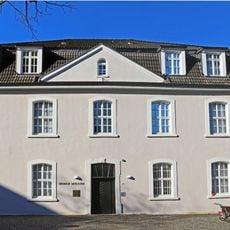
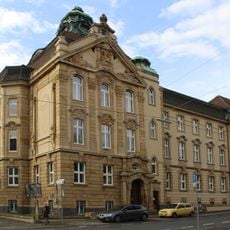
The Vestisches Museum occupied a former administrative building at Hohenzollernstraße 12, with just under 1,000 m² of exhibition space. Its rooms held Christian art from the Vest Recklinghausen, pieces of town and regional history, the everyday culture of miners' families and a collection of naive art. The city closed the museum in 2010.
The museum grew out of the local-history collection of the Orts- und Heimatverein Recklinghausen, founded in 1890. In 1922 it became a public museum supported by all the communities of the Vest Recklinghausen. In 1937, 37 paintings and prints, among them works by Käthe Kollwitz, Otto Pankok and Christian Rohlfs, were removed as "degenerate art". A bombing raid on 6 November 1944 destroyed most of the exhibition and storage. The city closed the museum in 2010.
The museum displays regional artworks and objects that reflect everyday life across centuries in this area. Visitors can observe how local crafts, clothing, and ways of living evolved over time.
The museum closed in 2010, so there is no exhibition to visit at Hohenzollernstraße 12. The building now houses the Institut für Stadtgeschichte and the Stadt- und Vestisches Archiv, which presents a redesigned city-history display there. The collection of naive art is not accessible to the public.
The museum's best-known holding was a collection of naive art, built up by director Thomas Grochowiak between 1954 and 1980 and enlarged by a donation from Marianne Kühn in 2003. Since the museum closed in 2010, this collection has not been accessible to the public.
The community of curious travelers
AroundUs brings together thousands of curated places, local tips, and hidden gems, enriched daily by 94,321 contributors worldwide.