Neustädter Tor

Log in to your account

AroundUs is a community-driven map of interesting places, built by curious explorers like you. It grows with every review, story, and photo you share.
Connect to save your favorite spots, contribute locations, and create personalized routes.
By continuing, you accept our Terms and Conditions and our Privacy Policy
Add to collection
Map
Suggest a change
Share

Neustädter Tor, Historic gate in Nördliche Innenstadt, Potsdam, Germany

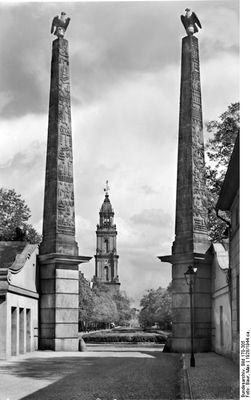
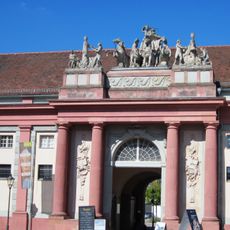
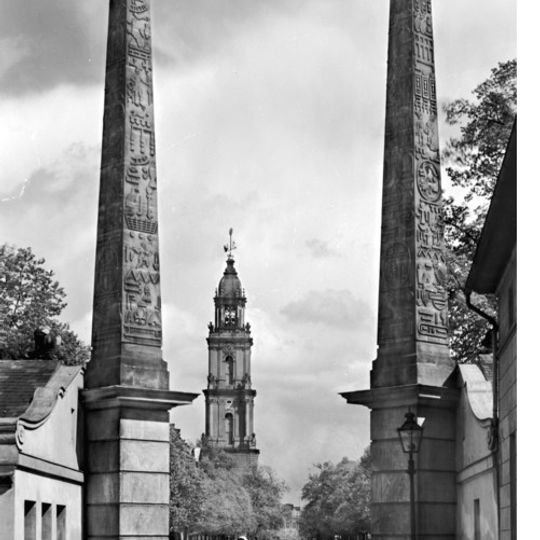
The Neustädter Tor was a passage flanked by two tall sandstone obelisks that stood on either side of the street. Each obelisk was decorated with reliefs resembling Egyptian inscriptions and carried a stone eagle with open wings at its top.

The first gate was built in 1722 as part of the city fortification that controlled trade and entry. Architect Knobelsdorff moved it further west in 1753 and created the obelisks to form a sight line from the palace to the park.

The name recalls the Neustadt district, which grew when Prussian settlers expanded the city westward in the early eighteenth century. The surviving obelisk now stands in a quiet area where passersby can observe its carved decorations up close.

The preserved obelisk stands near the intersection of Breite Straße and Lindenstraße and is easily visible from the street. A walk through the surrounding area reveals more traces of the old city layout, including wide avenues and historic building fronts.

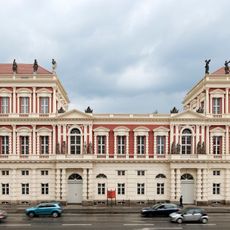
During World War II, one of the obelisks was completely destroyed, but a stone eagle survived the 1945 air raid. This damaged piece was placed on display at the Potsdam Museum in 2012 after decades in storage.

Location: Potsdam

Inception: 1753

Architects: Georg Wenzeslaus von Knobelsdorff

Made from material: sandstone

GPS coordinates: 52.39605,13.05003

Latest update: December 5, 2025 08:00

Vanished architectural structures of the world

This collection documents major buildings that have disappeared throughout history. It includes religious structures such as the 15th-century Porcelain Tower of Nanjing, whose glazed bricks gleamed in sunlight, as well as destroyed palaces, theaters, and public buildings from various periods and continents. Among the lost structures are the Colossus of Rhodes, the Temple in Jerusalem, the Great Buddhas of Bamiyan, the Berlin Wall, and the World Trade Center. The reasons for the disappearance of these structures range from warfare to natural disasters to deliberate demolition for urban redevelopment. The Palais du Trocadéro in Paris was demolished in 1937 to make way for the current Palais de Chaillot. The Crystal Palace in London burned down in 1936. The Tacoma Narrows Bridge collapsed in 1940, just months after opening. This compilation provides insight into lost architectural achievements and the historical circumstances of their disappearance.

Reviews

Visited this place? Tap the stars to rate it and share your experience / photos with the community! Try now! You can cancel it anytime.

« Neustädter Tor - Historic gate in Nördliche Innenstadt, Potsdam, Germany » is provided by Around Us (aroundus.com). Images and texts are derived from Wikimedia project under a Creative Commons license. You are allowed to copy, distribute, and modify copies of this page, under the conditions set by the license, as long as this note is clearly visible.

Discover hidden gems everywhere you go!

From secret cafés to breathtaking viewpoints, skip the crowded tourist spots and find places that match your style. Our app makes it easy with voice search, smart filtering, route optimization, and insider tips from travelers worldwide. Download now for the complete mobile experience.
Around Us App Screenshot

A unique approach to discovering new places

Le Figaro

All the places worth exploring

France Info

A tailor-made excursion in just a few clicks

20 Minutes