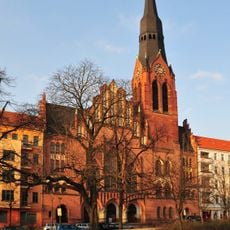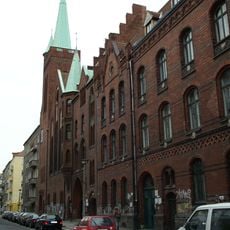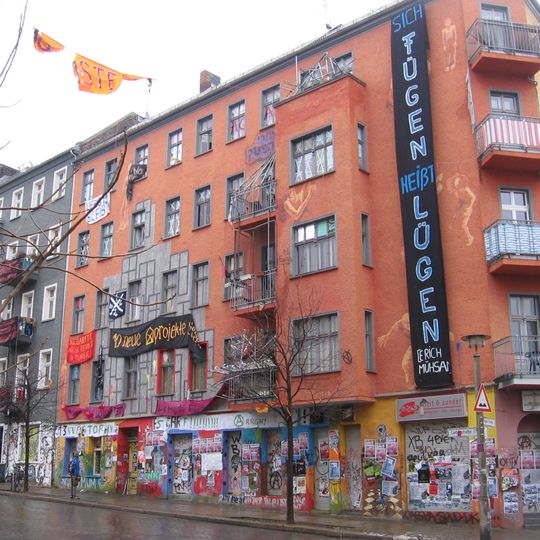
Liebigstraße 14, Historical residential building in Friedrichshain, Germany.
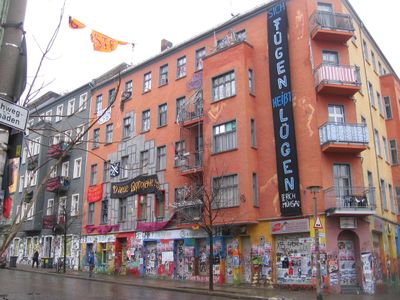
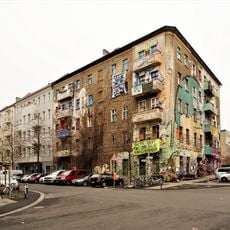
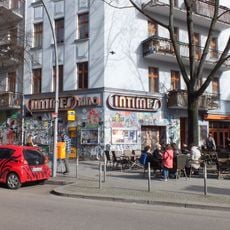
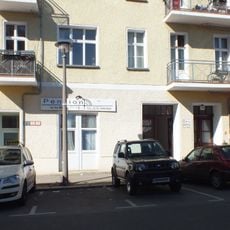
Liebigstraße 14 is a five-story residential building at the corner of Liebigstraße and Rigaer Straße in Friedrichshain, marked by its distinctive orange-painted facade. The structure displays typical late 19th-century Berlin architecture with straightforward design and regular window patterns that characterize many buildings from this period.
After the fall of the Berlin Wall in 1989, the building stood vacant and was subsequently occupied by residents who gave it new purpose. It later gained legal status as a rental residence with nine apartments, beginning a complex history of use and transformation.
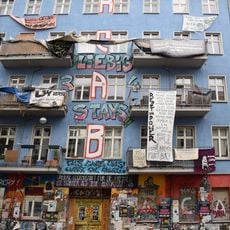
After the 1990 occupation, residents negotiated with the municipal housing association WBF and the city, signing regular leases for nine units in 1992. The house became known as "Liebig 14" and, after the 2011 eviction, as a symbol of resistance to rising rents in Berlin's left-wing scene.
The building is situated at a central intersection in the Friedrichshain district and is easily accessible by public transport. Visitors should note that this is private property, so it is best to view the exterior from the public street to observe its architectural features.
On 2 February 2011 the eviction began at 8 a.m., with up to 2,500 police officers deployed in the surrounding area. That evening 1,500 to 2,000 people marched from Boxhagener Platz through the southern Friedrichshain quarter; 61 officers were injured, 82 demonstrators were temporarily detained and 22 brought before a judge. The operation cost was estimated at over one million euros.
The community of curious travelers
AroundUs brings together thousands of curated places, local tips, and hidden gems, enriched daily by 94,395 contributors worldwide.