Sayn-Homburg, Medieval county in Rhineland-Palatinate, Germany
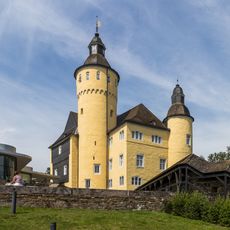
Sayn-Homburg was a medieval county in the western part of what is now Germany, with Homburg Castle serving as its main administrative center in Rhineland-Palatinate. The territory included several smaller settlements and lands governed by the noble family who held power over the region.
The county was established in 1283 as a split from Sponheim-Sayn and merged with Wittgenstein in 1384 after Count Salentin married the Wittgenstein heiress. This union created a stronger entity that continued under the name Sayn-Wittgenstein for centuries afterward.
The noble family of Sayn-Homburg maintained strong connections with neighboring territories through marriages and alliances, influencing regional governance until 1919.
Visitors interested in this county's history can find information in regional archives and museums throughout Rhineland-Palatinate, where records about the noble family are available. Exploring these collections requires visiting during regular opening hours when genealogical documents and materials are accessible.
The connection with Wittgenstein through a political marriage was far more than a diplomatic arrangement, as it fundamentally reshaped the power structure across the entire region. This type of territorial merger through marriage was a common practice among medieval German nobility to consolidate influence.
The community of curious travelers
AroundUs brings together thousands of curated places, local tips, and hidden gems, enriched daily by 92,527 contributors worldwide.