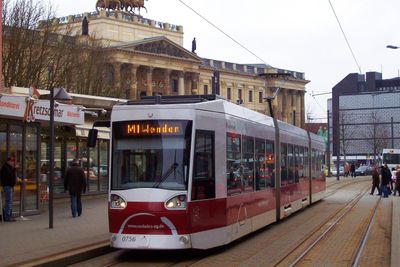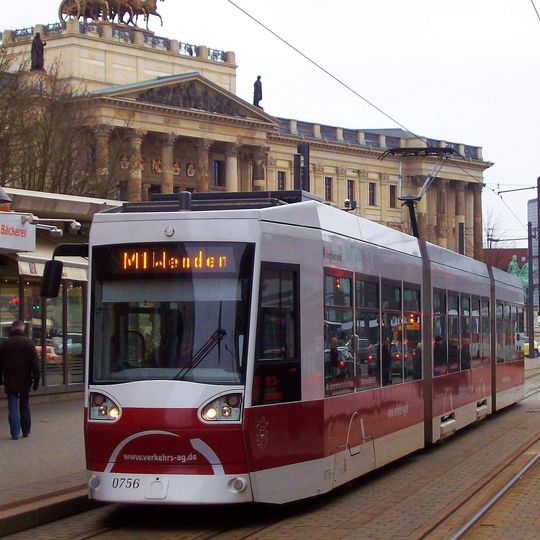
Trams in Braunschweig, network of tramways in Braunschweig in Lower Saxony, Germany
The tram system in Braunschweig spans about 36 kilometers with six operating lines serving the city and surrounding areas. It uses modern and older vehicles, including low-floor models designed for easy boarding, running on a distinctive 1,100-millimeter gauge track that is wider than standard German tram systems.
The tram service began in 1879 with horse-drawn carriages and switched to electric power in 1897, operating on 600-volt overhead wires that continue today. The network expanded through the early 20th century, suffered damage during World War Two, was rebuilt quickly afterward, and has modernized with new sections and vehicles since the 1950s.
The trams have been woven into daily life for over 140 years and shape how people move through the city. Residents depend on them as a familiar way to reach work, school, and shopping areas without thinking about traffic or parking.
The trams run every 10 to 15 minutes during daytime hours and connect at major hubs with buses and regional trains for easy transfers. Most stops are located at busy spots like the main train station and city center, making it straightforward to reach different parts of the city or travel to nearby towns.
Braunschweig's tram system uses an unusual 1,100-millimeter gauge that is wider than most other German cities, giving the network its own technical identity. This larger gauge allows for smoother rides and sets the system apart as a rare example of non-standard track width in Germany.
The community of curious travelers
AroundUs brings together thousands of curated places, local tips, and hidden gems, enriched daily by 90,760 contributors worldwide.