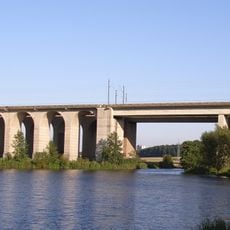
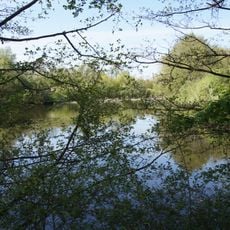
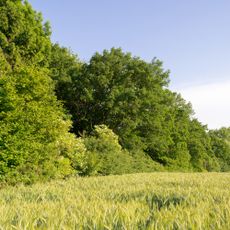
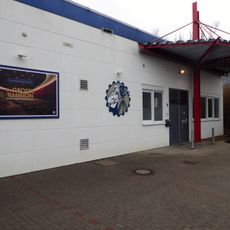
Hof Meyer zu Bentrup, Historical estate and watermill in Brönninghausen, Bielefeld, Germany.
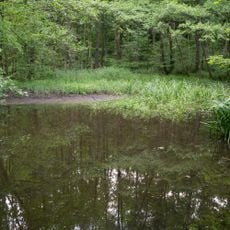
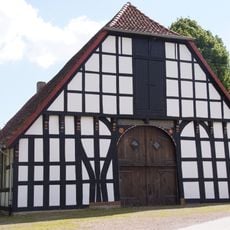
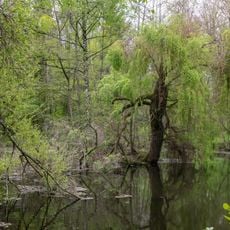
Hof Meyer zu Bentrup at Salzufler Straße 145–149 in Brönninghausen is a farm complex whose old farmhouse burned around 1850; the former grain store was converted into a dwelling and extended in 1903. A barn built in 1860 stands on piles directly by the millpond, with a cow shed from 1902 and another barn from 1937.
The farm was first documented on 16 March 1305, when Count Otto III of Ravensberg donated it to Stift Schildesche as compensation. A document of 1550 names a "Meiger zw Beventorf"; the family name Meyer zu Bentrup has been used, with interruptions, ever since. Reinhard Meyer zu Bentrup, an agricultural scientist and CDU politician, took over the farm in 1969.
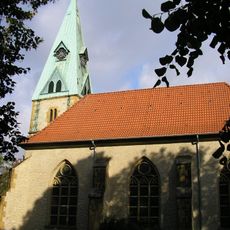
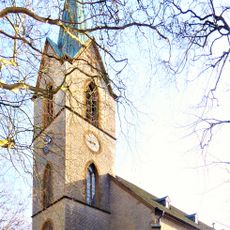
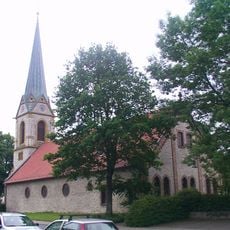
The estate's chapel, founded in 1458, was the only church building Brönninghausen ever had; the village belonged to the Heepen parish. It stood among the 32 oaks in front of the farm, was already ruined by 1698, probably destroyed in the Thirty Years' War, and its remains were cleared around 1900. The oaks are still a landmark of the farm.
The farm is accessible from the road network and buildings are visible from outside, though entry to the private complex is restricted. Visitors should view the site respectfully from public areas without trespassing on private grounds.
The mill's water wheel was replaced by a turbine in 1938, when Hermann Meyer zu Bentrup rebuilt it to its present form. The Kruse family from Hohenhausen leased the mill from 1897, continuing a milling tradition across three generations until the lease ended in 2005. The milling and water rights still exist today.
The community of curious travelers
AroundUs brings together thousands of curated places, local tips, and hidden gems, enriched daily by 94,552 contributors worldwide.