Buddha-Museum Traben-Trarbach, Buddhist art museum in Traben-Trarbach, Germany
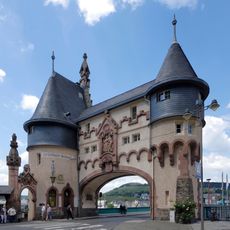
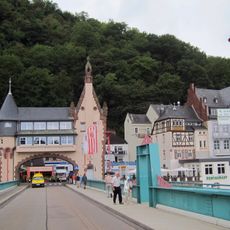
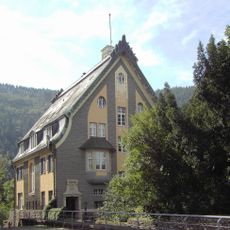
The Buddha Museum Traben-Trarbach occupies the former Julius Kayser wine cellar, built in 1905/1906 by architect Bruno Möhring next to the Moselle bridge he also designed. The building was restored close to its original state using natural stone, and a 225-square-metre annex with a glazed front nearly ten metres high was added. Inside, around 2,000 Buddha figures, arhats and bodhisattvas are displayed across roughly 3,000 square metres, with a further 1,000 square metres in the courtyard.
The cellar was built in the early 1900s as a wine storage facility for the Julius Kayser company and designed by architect Bruno Möhring in Art Nouveau style. In 2009, the building was converted into a museum dedicated to Buddhist art.
The figures come from Burma, China, India, Cambodia, Laos and Thailand, made in different periods and from different materials. Besides Buddhas, the collection shows arhats and bodhisattvas; the largest figure is 3.90 metres tall and weighs two tonnes. Books, CDs and multimedia installations cover Buddhism in art, culture, philosophy and history, and scholars are regularly invited to lecture on their special fields.
The exhibition rooms are mostly underground, so it is worth wearing comfortable shoes and being prepared for changing light conditions. Guided tours are available on certain days and can help make sense of the collection.
The museum's 225-square-metre extension has a glazed front almost ten metres high and 17 metres wide, added after later production buildings were demolished. The rooftop garden above it looks out over the Mosel. Inside, the largest figure measures 3.90 metres and weighs two tonnes.
The community of curious travelers
AroundUs brings together thousands of curated places, local tips, and hidden gems, enriched daily by 93,131 contributors worldwide.