Villa Rumpf, Protected heritage villa at Heiliger See, Potsdam, Germany
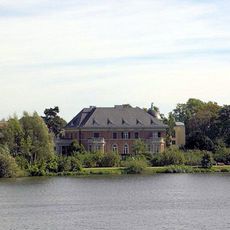
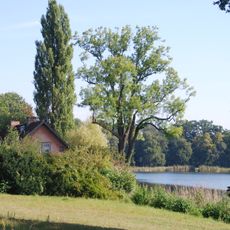
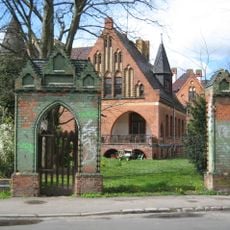
Villa Rumpf is a red brick tower villa in Dutch Neo-Baroque style, built 1894/95 by master mason Emil Lilie to a design by Berlin garden architect Gustav Meyer, with a garden, pavilion and street-side enclosure on the Heiliger See. A tower with a bell-shaped hood stands on the lake side, and the curved gables echo those of the Holländisches Etablissement.
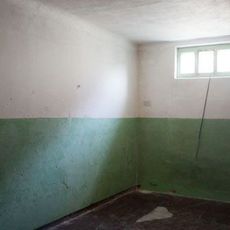
Villa Rumpf was built in 1894/95 in Dutch Neo-Baroque style for the Würzburg-born painter Fritz Rumpf; the design by Berlin garden architect Gustav Meyer was executed by master mason Emil Lilie. The family owned it until 1945, when it burned out at the end of the Second World War and was never restored to its original state. The Red Army seized it and passed it to the French military mission, which moved on to Villa Seestraße 41, after which artists and filmmakers used the ruin. The painter Peter Wilde lived there until 2000, first in a roof room, restoring it piece by piece and removing soot from the 1945 fire from every object.
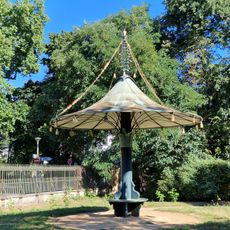
The garden pavilion displays wooden columns inspired by the architecture of Saint Peter's Basilica in Rome. This connection to Italian building forms reflects the cosmopolitan tastes that shaped Potsdam's villa landscape.
The villa stands at Ludwig-Richter-Straße 17, directly on the Heiliger See, with a garden, a pavilion and a street-side fence. It is a private residence, so visitors see it from the street and the lakeside path; the interior is not open. The 1900 garden pavilion with its twisted wooden columns is the detail to look for from outside.
The six-sided garden pavilion, added in 1900 by carpenter Ferdinand Krüger, has twisted wooden columns copied from the columns of the altar canopy in St. Peter's Basilica in Rome. The villa's tower with its bell-shaped hood on the lake side echoes the gatehouses of the Neuer Garten.
The community of curious travelers
AroundUs brings together thousands of curated places, local tips, and hidden gems, enriched daily by 93,621 contributors worldwide.