Marmorpalais, Neoclassical palace in Potsdam, Germany.
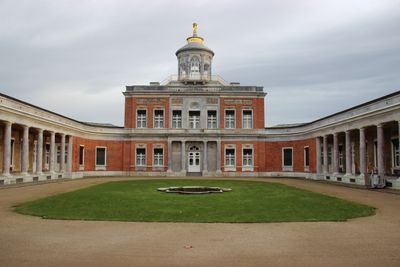
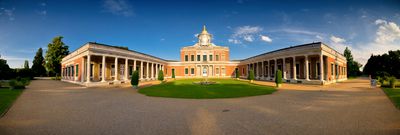
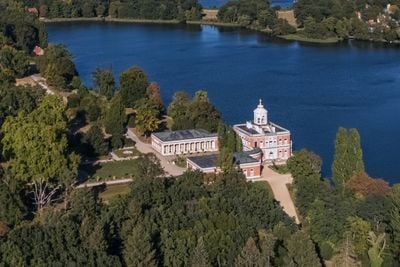
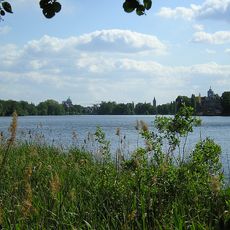
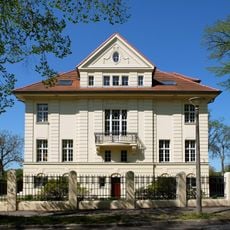
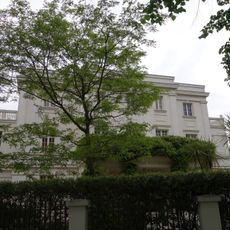
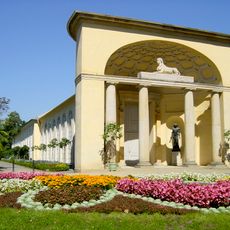
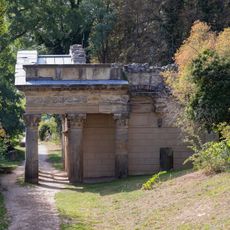
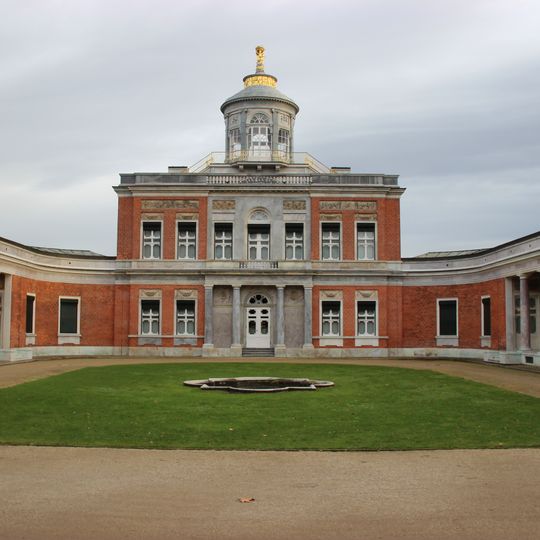
The Marmorpalais is a two-storey red brick palace with grey and white Silesian marble trim, built on a square plan in Potsdam's Neuer Garten on the shore of the Heiliger See. A round temple-like belvedere with putti carrying a fruit basket crowns the flat roof. Curved single-storey colonnaded wings flank the entrance front, and a half-sunken temple-ruin kitchen stands below the lakeside terrace.
Frederick William II commissioned the palace in 1787; Carl von Gontard and Carl Gotthard Langhans designed it in the early Neoclassical style, and the shell was finished in 1793. In 1797 Michael Philipp Boumann added two single-storey side wings, but the king died that November in the palace and his successor Frederick William III had only the exterior completed. Ludwig Ferdinand Hesse finished the wing interiors in 1843–1848.
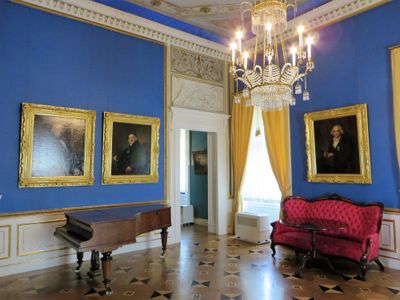
The name comes from the grey and white Silesian marble used for the facade's decorative and structural elements. The king's mistress Wilhelmine Enke, made Countess Lichtenau in 1796, influenced the interior decoration. On the upper floor, Langhans furnished an oriental cabinet as a Turkish tent room with a divan.
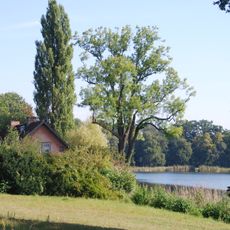
The palace stands on the shore of the Heiliger See in the Neuer Garten, reachable on foot through the park; a terrace with side stairs once led down to the water, where the court boarded boats. All 40 rooms have been open to the public since 14 April 2006, and exterior restoration was finished in autumn 2009. The former palace kitchen, built as a half-sunken temple ruin, sits below the terrace on the lake shore.
The separate kitchen building was intentionally designed to resemble an ancient temple ruin when viewed from the main terrace. This playful architectural concept reflected the era's fashion for adding romantic landscape elements to estates.
The community of curious travelers
AroundUs brings together thousands of curated places, local tips, and hidden gems, enriched daily by 92,803 contributors worldwide.