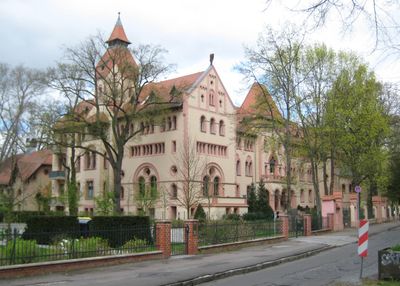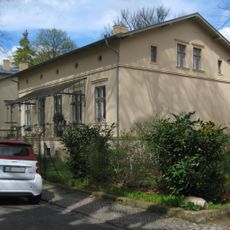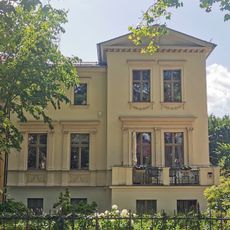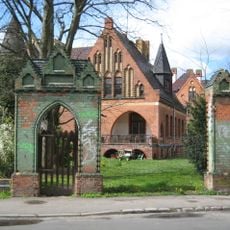
Kaiserin-Augusta-Stift, Cultural heritage monument in Potsdam, Germany.
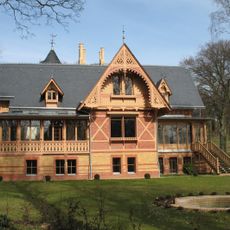
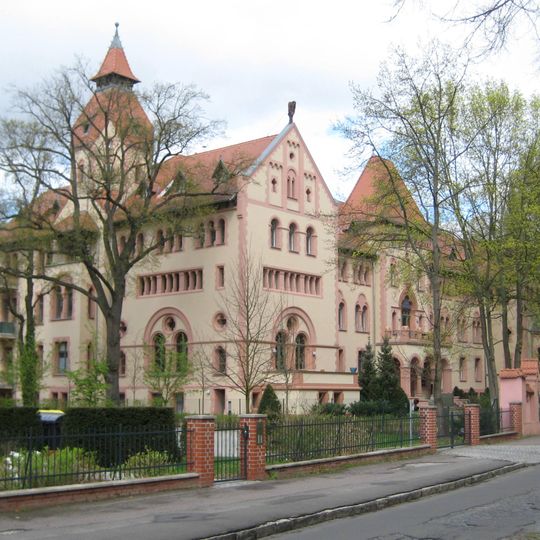
The Kaiserin-Augusta-Stift is a building complex in Potsdam featuring neo-Romanesque elements that brought multiple functions under one roof. It contained a dining hall, gymnasium, medical ward, chapel, and living quarters for its residents.
The institution was built between 1900 and 1902, providing a home for up to 80 orphaned girls from officers, clergy, and civil servants. After World War II, the site underwent a complete transformation when repurposed for entirely different uses.
The complex served as a shelter for orphaned girls from prominent families, providing education and care within its walls. This purpose shaped the building as a welfare institution and shows how such facilities once structured young women's lives.
The building can be viewed from the outside and displays its original architecture clearly despite modern reuse. Best views are available from the surrounding streets, which show the entire complex.
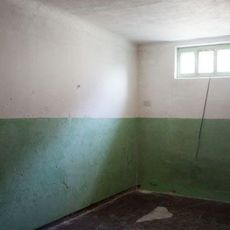
From 1945 to 1994, the Soviet secret service KGB operated its main headquarters for European operations from this building. This hidden history shows how the structure gained an entirely new significance after the war.
The community of curious travelers
AroundUs brings together thousands of curated places, local tips, and hidden gems, enriched daily by 90,966 contributors worldwide.