Grube Frischglück, Historic iron mine shaft in Neuenbürg, Germany.
Grube Frischglück is a show mine near Neuenbürg where visitors walk three levels of the former iron-ore mine on a roughly one-hour tour. The rock faces expose ore and barite veins, and the mining method known as Firstenbau can be seen underground.
The mine was in operation from 1770 to 1866. From 1797 the ore was processed at the royal ironworks in Friedrichstal, 60 km away, and between 1770 and 1843 more than 2625 t of iron ore were extracted. From 1851 blasting and contract work were introduced; in 1866 mining ceased because reserves were exhausted and demand had fallen.
The site reflects how mining shaped the identity of this region and the lives of generations of workers. Visitors can see evidence of their labor preserved in the rock faces and tunnels throughout the excavation.
The site is accessible through guided tours where sturdy footwear and warm clothing are recommended due to consistently low underground temperatures. A visit with children is possible but requires care on uneven surfaces and steep passages.
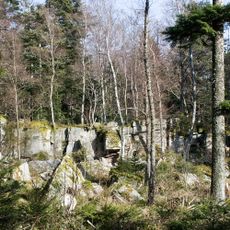
Next to the mine entrance lies the archaeological excavation area with seven smelting furnaces found in situ; geomagnetic surveys confirmed another fifty nearby. At around 2,500 years old, this is among the earliest known iron smelting sites in Central Europe. About 50 kg of ore and charcoal yielded roughly 1 kg of iron.
The community of curious travelers
AroundUs brings together thousands of curated places, local tips, and hidden gems, enriched daily by 93,224 contributors worldwide.