Museum Weltkulturen, Ethnographic and archaeological museum in Mannheim, Germany.
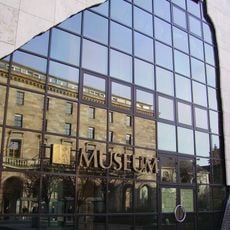
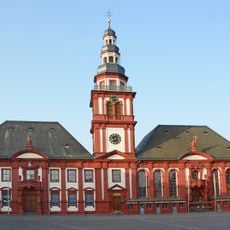
Museum Weltkulturen is an archaeological and ethnographic museum in Mannheim's Quadrat D5, between the Rathaus and the Zeughaus, part of the Reiss-Engelhorn-Museen. Its modern building, designed by architect Carlfried Mutschler and artist Erwin Bechtold, was completed in 1988. The Kulturen der Welt section holds ethnographic and natural history collections, while the first floor presents the Stone Age in the exhibition MenschenZeit – Geschichten vom Aufbruch der frühen Menschen.
The collection originated with Elector Carl Theodore of the Palatinate and grew significantly through major acquisitions including painter Gabriel von Max's collection. These foundations enabled the current diversity of artifacts from various cultures and time periods.
The first floor holds the permanent display MenschenZeit – Geschichten vom Aufbruch der frühen Menschen, devoted to the Stone Age periods of early humans. The ethnographic and natural history holdings of the Kulturen der Welt section go back to the collections of Elector Carl Theodor of the Palatinate. Temporary exhibitions occupy the ground floor and the second floor.
The building is easily accessible by public transportation and offers barrier-free access for visitors with mobility limitations. Visitors should plan about two to three hours for a thorough visit through the galleries.
The Egyptian show "Ägypten – Land der Unsterblichkeit" ran from 16 November 2014 to 10 January 2016 as a temporary special exhibition, not a permanent gallery. Temporary shows occupy the ground floor and second floor; the first floor holds the permanent MenschenZeit displays on the Stone Age.
The community of curious travelers
AroundUs brings together thousands of curated places, local tips, and hidden gems, enriched daily by 94,475 contributors worldwide.