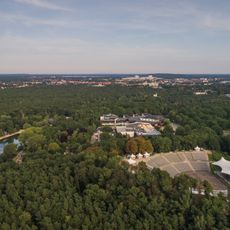
Wasserwerk Wuhlheide, Waterworks and architectural monument in Wuhlheide, Berlin, Germany.
The Wasserwerk Wuhlheide is a drinking water treatment facility and protected historic building in Berlin-Köpenick with multiple filter systems. The equipment consists of rapid sand filters, specialized Bollmann filters, and manganese chambers that work together to clean the water.
The facility was built between 1911 and 1914 following designs by architect Gustav Ziesemann to supply drinking water to Berlin's growing population. It was part of the infrastructure that supported the city during its rapid expansion in the early 20th century.
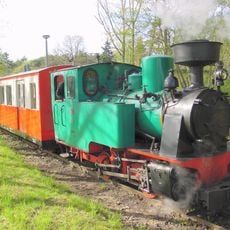
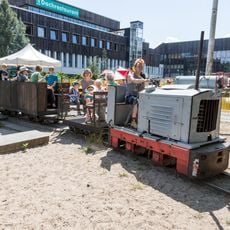
The site is still an active waterworks, not a museum open to visitors. Its name comes from the surrounding Wuhlheide forest, and the grounds sit in Jagen 340 east of the Karlshorst trotting track. The complex forms a network with the Friedrichshagen waterworks, and in 2014 a family festival marked its centenary on the grounds.
The site is an active waterworks, not a museum open to the public; the 100th-anniversary family celebration on 17 May 2014 was a one-off event. The grounds lie east of the Karlshorst trotting track in Jagen 340, and the listed complex includes the machine house, workshops, two residential buildings, two clear-water tanks and the water tower.
The water tower was never rebuilt to its full height after World War II damage, so it stands lower than originally designed. The plant's laboratory was one of three that monitored water quality for the whole of greater Berlin. In 2013 the western lifting gallery was shut down, switching off three raw-water pumps.
The community of curious travelers
AroundUs brings together thousands of curated places, local tips, and hidden gems, enriched daily by 92,723 contributors worldwide.