Schloss Meysenbug, Neo-Gothic Tudor-style castle in Lauenau, Germany
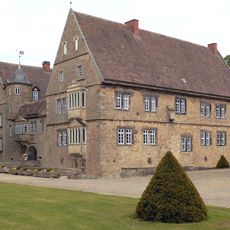
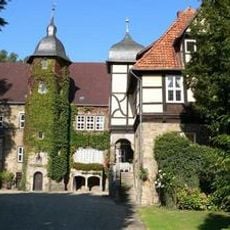
Schloss Meysenbug is a castle in Lauenau, Lower Saxony, rebuilt in 1867 in English Neo-Gothic Tudor style after the earlier moated manor was demolished and its moat filled in. The 1897 brick extension adjoins the main building. The estate was first recorded in 1499 as a castle held by the Lords of Zerssen.
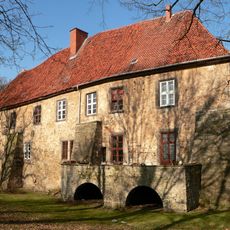
Meysenbug was first recorded in 1499 as a castle ("castrum") granted by the Counts of Holstein-Schaumburg to the Lords of Zerssen. A town fire destroyed it in 1570, and Wulfferd von Zerßen rebuilt it between 1604 and 1610 as a moated castle. In 1776 the hexagonal stair tower, the balcony and the side gables were removed. The present building was erected in 1867 after the old complex was demolished, and in 1897 a brick extension was added.
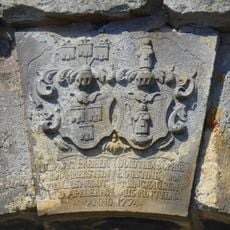
The name Meysenbug comes from a family that died out in 1810 with Heinrich von Meysenbug; Carl Rivalier was ennobled in 1825 with the addition of that name. The von Meysenbug family lived in the castle until 2014, when it was sold.
The grounds are most easily reached on foot or by car, allowing visitors to view the castle from outside and explore the surrounding parkland. The best time to visit is during warmer months when the paths are dry and the sight lines to the architecture are clearer.
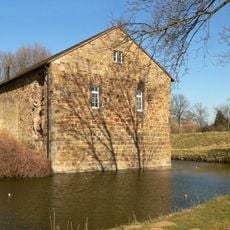
The 1867 Tudor-style building replaced an earlier water castle whose moat (Graft) was filled in during the rebuild. The name Meysenbug comes from a family that died out in 1810 with Heinrich von Meysenbug; Carl Rivalier was ennobled in 1825 with that added name.
The community of curious travelers
AroundUs brings together thousands of curated places, local tips, and hidden gems, enriched daily by 92,750 contributors worldwide.