Blaue Kuppe, Natural monument in Eschwege, Germany
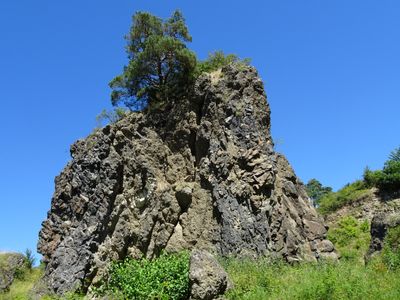
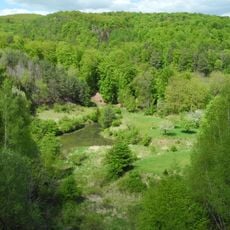
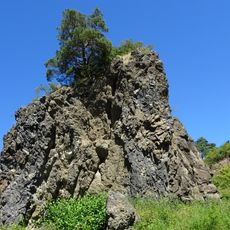
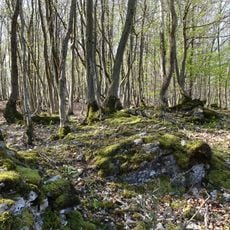
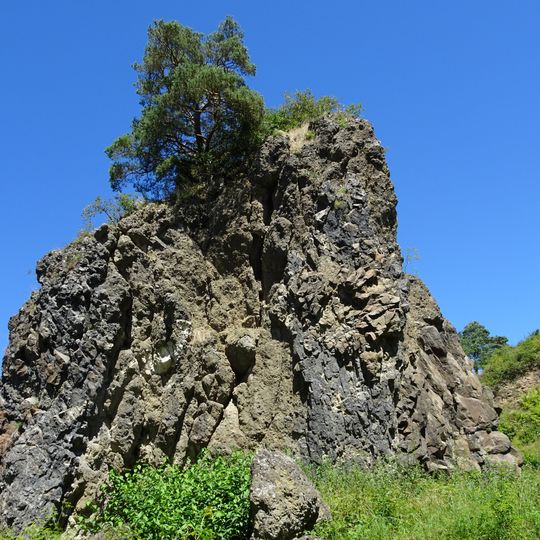
Blaue Kuppe is a protected natural area near Eschwege featuring a hill composed of volcanic rock formations with multiple mineral types visible throughout. The exposed basalt layers across the slopes make it a destination for viewing geological structures.
The hill formed from volcanic activity and was studied by 19th-century scientists including Alexander von Humboldt, who documented its origins. The area received protected status in 1910 after basalt extraction had taken place.
The name comes from the bluish-gray color of the basalt that becomes visible in certain light conditions. Hikers today visit to observe the exposed rock formations and the range of minerals contained within them.
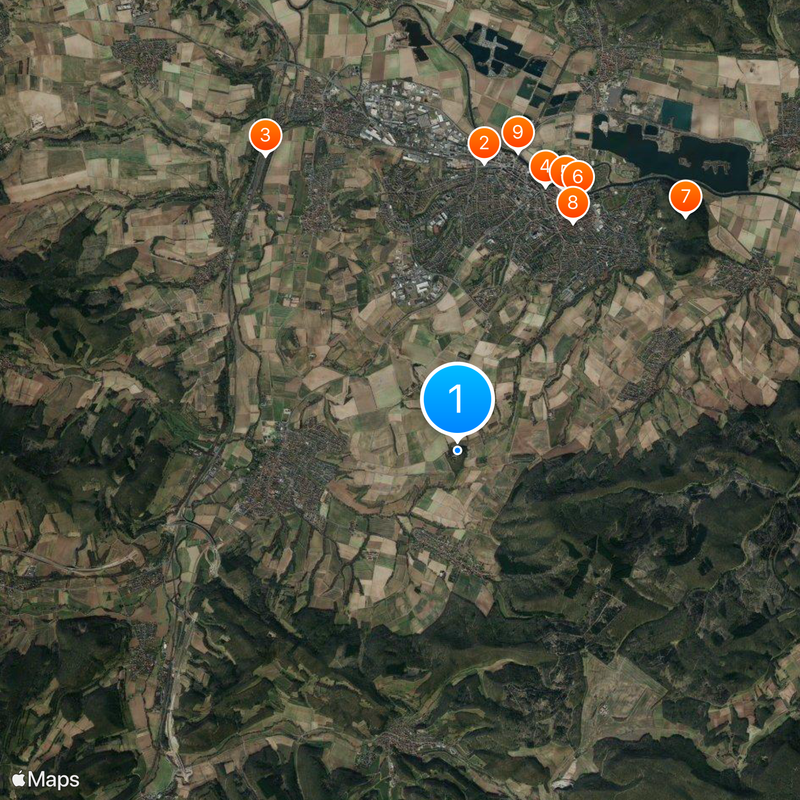
A walking trail circles the hill and connects to nearby villages, allowing visitors to view the rock formations from different angles. The trail is accessible on foot and includes several spots to stop and observe.
The site was worked for basalt extraction before protection laws ended mining activity there. Mineral collections from the location are housed at the University of Göttingen, displaying dozens of varieties found on-site.
The community of curious travelers
AroundUs brings together thousands of curated places, local tips, and hidden gems, enriched daily by 91,137 contributors worldwide.