Weidenhäuser Brücke, Stone arch bridge in Marburg, Germany
The Weidenhäuser Brücke is Marburg's oldest Lahn bridge, a four-arch sandstone structure completed in 1891/1892 to plans by city architect Louis Broeg. It links the western old town with the Weidenhausen district on the east bank. During the 2018–2019 renovation the sandstone arches were dismantled, the stone pedestals reworked and reused, and a new footbridge was added on the north side.
A stone bridge over the Lahn was first documented in 1250 in a charter of Sophie of Brabant, then called Stadt-Brücke or Lange Brücke. After the flood of 10 January 1552 toppled its arches and central pier, killing between 10 and 24 people, it was rebuilt in stone by 1555. The winter flood of 31 December 1763 swept away the two middle piers, replaced by a timber structure that lasted almost 130 years. The present four-arch sandstone bridge, built to plans by city architect Louis Broeg, was finished in 1891/1892.
The bridge serves as a natural crossing point where residents and visitors meet while moving between the old town and newer neighborhoods. It frames views of the castle and the riverside landscape that shape how people experience Marburg.
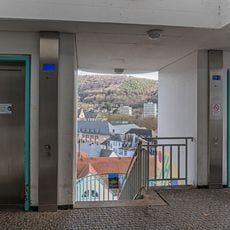
The bridge carries car, bus and bicycle traffic between the old town and Weidenhausen; during the 2018 to August 2019 renovation it was fully closed and traffic diverted, with changes to Marburg's bus network. A new footbridge was added on the north side, so both sides can now be walked.
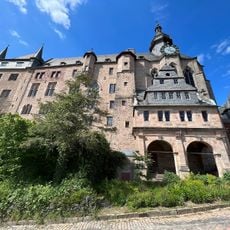
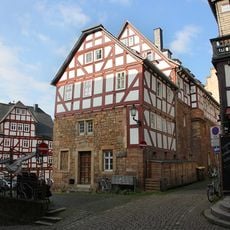
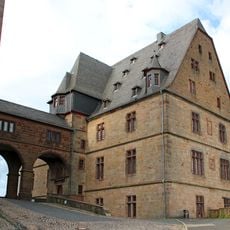
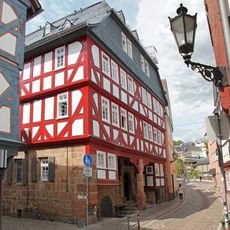
From the bridge, the Marburg Castle rises visibly above the town with medieval timber-framed buildings nestled along the riverside below it. This view reveals how the castle towers over the settlement and how medieval architecture still defines the town's appearance today.
The community of curious travelers
AroundUs brings together thousands of curated places, local tips, and hidden gems, enriched daily by 93,764 contributors worldwide.