Old University Marburg, Neo-Gothic university building in Marburg, Germany
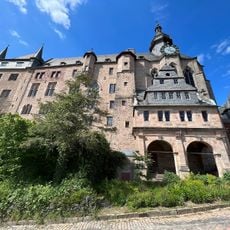
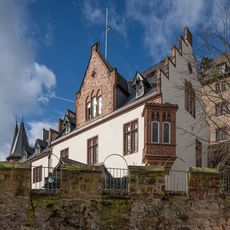
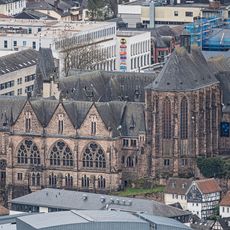
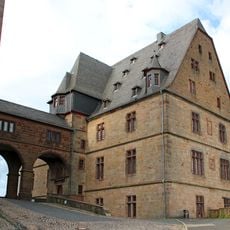
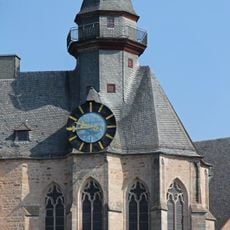
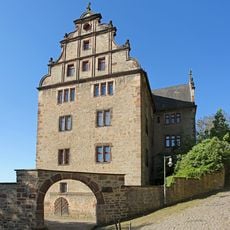
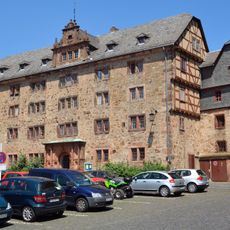
Old University Marburg is a neo-Gothic building of the Philipps University, erected in two phases in 1873–1879 and 1887–1891 to plans by university architect Carl Schäfer. Its facades of white Wehrda sandstone are divided by pointed gables, tracery windows and buttresses, with gargoyles and figure sculpture. The former Dominican church adjoins it directly, and the vault keystones bear the coats of arms of German university cities.
The Dominican order received the site at the end of the 13th century, and the monastery church's choir was completed around 1320. After secularisation in 1527 the monastery became the main building of the newly founded Philipps University. The monastery buildings were demolished from 1873, while the church and sacristy were kept and integrated into Carl Schäfer's neo-Gothic new building, erected in two phases in 1873–1879 and 1887–1891.
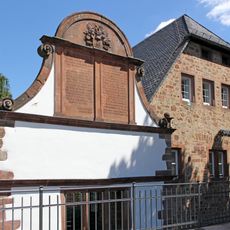
The Aula, 27 m long, 14 m wide and 8.5 m high, has a painted self-supporting wooden ceiling by Frankfurt architect Alexander Linnemann. Two panels in the north cloister show woodcuts and names of professors who taught at the Philippina before 1653. A dog figure on the roof above the former latrine recalls the Dominicans, the "Domini canes".
The main entrance has been on the higher Reitgasse side since the 1960s conversion; the original Lahntor entrance with its monumental stair now leads into the cloister. The cloister serves as the central circulation space, and the Aula is reached from it. The Aula ceiling was secured with glued timber beams and given new air conditioning in the late 1980s.
A dog figure on the roof above the former latrine block in the northwest corner recalls the Dominicans, punningly called Domini canes, the "hounds of the Lord" who bark the Gospel to the whole world. Keystones of the vaults carry the coats of arms of German university cities.
The community of curious travelers
AroundUs brings together thousands of curated places, local tips, and hidden gems, enriched daily by 93,939 contributors worldwide.