Stadtschloss Krefeld, City palace in Krefeld, Germany
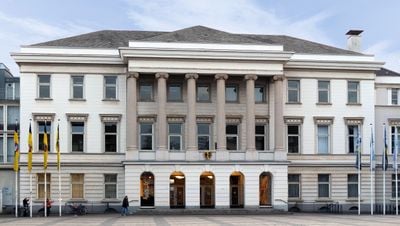
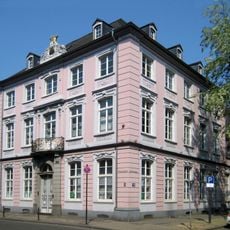
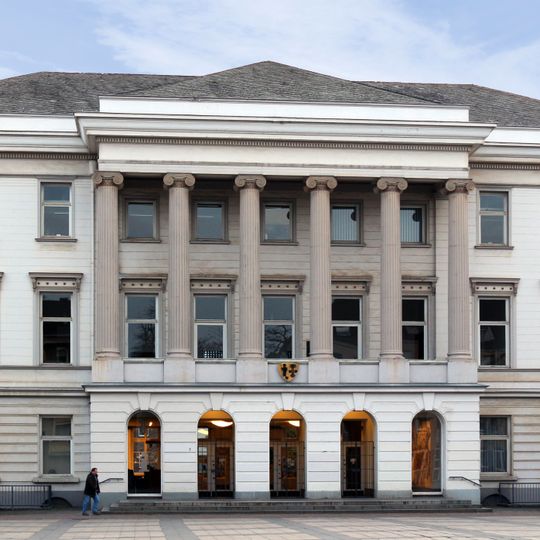
Stadtschloss Krefeld is a three-storey classical building whose main block has eleven window axes on its long sides. Its design draws on English Palladianism with Louis-seize elements, and a neo-Renaissance wing from the late 19th century adjoins the north-west corner. The east facade is white-rendered, with a high rusticated ground floor and a piano nobile whose tall rectangular windows have pediments and a continuous sill cornice.
Construction began in 1791 under Conrad von der Leyen's direction and the building suffered severe damage during World War II. Its reconstruction in the 1950s restored it to become the city's main administrative headquarters.
The palace was once home to the silk manufacturers who made Krefeld prosperous. Today this connection remains visible in the building's central role within city life.
The palace stands on the western edge of Krefeld's old town centre, where Conrad von der Leyen had the city wall breached in 1790 to make room for it. It is an active city hall, so the building is not open to tourists; the white-plastered east facade, the rusticated ground floor and the portico columns that survived the 1943 destruction can be seen from the street. The 2020–2021 renovation renewed the windows, the slate roof and the facade.
Original architect Martin Leydel designed separate wings specifically for stables and riding facilities alongside the main residence. These additions reveal how central horses and horsemanship were to the wealthy families living here.
The community of curious travelers
AroundUs brings together thousands of curated places, local tips, and hidden gems, enriched daily by 93,046 contributors worldwide.