FFH Gebiet Blixmoor, Special Area of Conservation in Wees, Germany.
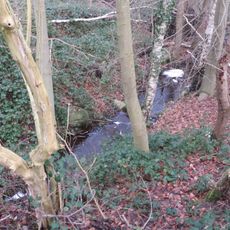
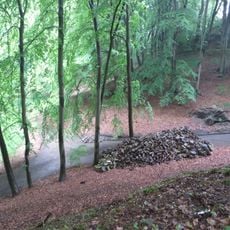
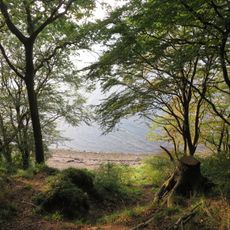
FFH Gebiet Blixmoor is a 29-hectare NATURA 2000 site in the municipality of Wees, Schleswig-Flensburg district. Its northeast holds the forest-enclosed Blixmoor, with a small and a large bog pond as open water and a transitional bog to the west. The southern half carries various forest types with small water bodies, rising to 54.7 m in beech forest about 100 m south of the moor lake.
The name Blixmoor was first recorded in writing in 1779; the Middle Low German "Blik" refers to a treeless, bright patch. After the Second World War the British occupation authority clear-felled the entire Weesries state forest and shipped the timber to Britain as reparations, which explains the absence of old trees. Peat was still cut in the Blixmoor just after the war because fuel was scarce. The standard data sheet was drawn up in June 2004, proposed as a Site of Community Importance in September 2004, confirmed by the EU in November 2007 and designated nationally in January 2010.
The area demonstrates to visitors how wetland ecosystems function and why protecting these spaces matters for the region. People who come here can observe how different species depend on each other in this specific habitat type.
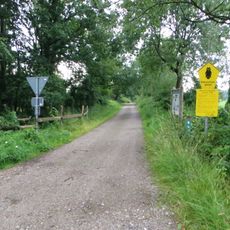
The area is accessible via marked walking paths, though certain sections close during sensitive breeding seasons for birds and amphibians. Sturdy footwear is advisable since the ground tends to be wet and soft underfoot.
The moor's two Annex II species are the Large White-faced Darter (Leucorrhinia pectoralis) and the Great Crested Newt, both rated overall C in the 2020 report to the European Environment Agency. The moor frog was reported with only 20 to 100 individuals. Peat was still cut here just after the Second World War because fuel was scarce.
The community of curious travelers
AroundUs brings together thousands of curated places, local tips, and hidden gems, enriched daily by 93,378 contributors worldwide.