Elbhochbrücke, Suspended bridge project in Hamburg, Germany.
The Elbhochbrücke was a planned suspension bridge project across the Elbe River in Hamburg, designed with a main span of approximately 750 meters and reaching about 180 meters above the water level. The structure was intended to connect the two sides of the river, though the full construction was never completed.
The project originated in 1936 following a proposal made during a harbor visit, with the design intended to exceed other well-known bridge structures in scale. Work began on the foundations but was never completed, and traces of the construction remained visible in the river for years.
The name refers to its planned crossing of the Elbe River, and the project was part of larger plans to reshape Hamburg's waterfront. The intended design would have transformed how residents and visitors moved through the city while marking a significant point in its urban landscape.
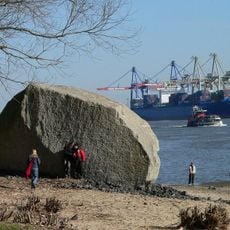
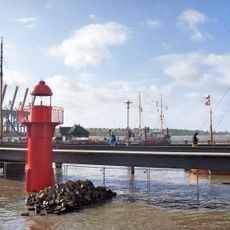
The construction work required solutions for challenging ground conditions, as sandy riverbanks presented different engineering problems than solid rock foundations. Visitors can explore the remnants and traces of construction in the water and along the banks to better understand the technical difficulties that affected this project.
The project struggled partly due to technical problems with the sandy subsoil, which differed from the stable rock foundations supporting other well-known bridges elsewhere. This geological challenge made the Hamburg project uniquely difficult compared to similar bridge-building efforts at other locations.
The community of curious travelers
AroundUs brings together thousands of curated places, local tips, and hidden gems, enriched daily by 91,664 contributors worldwide.