Scharfrichterhaus, Historical executioner residence in Weimar, Germany
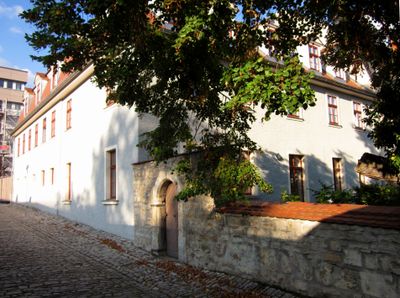
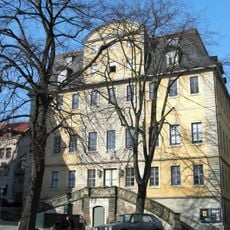
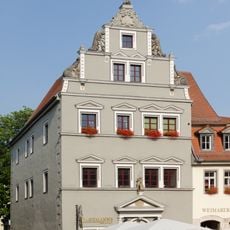
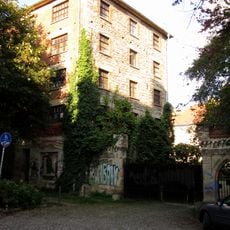
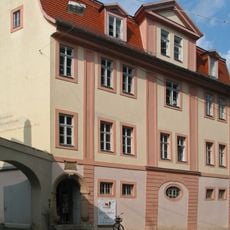
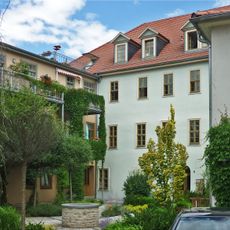
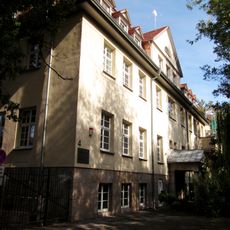
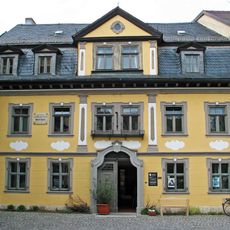
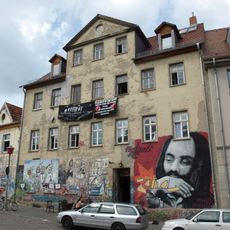
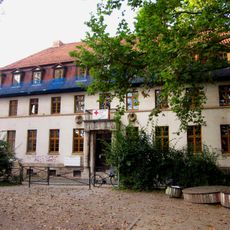
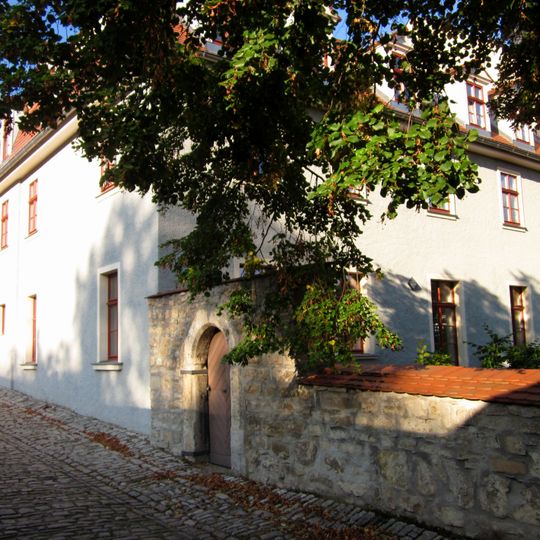
The Scharfrichterhaus at Wagnergasse 36 in Weimar's Jakobsvorstadt is a two-storey baroque house with a mansard roof, built at right angles and plastered on the outside. A walled plot with a portal gate adjoins it; the courtyard wall is left in visible rubble limestone. The building was formerly called a Meisterei and is over 300 years old.
The building was constructed during the baroque period and served for over 300 years as home to executioner Christian Daniel Wittich's family and his successors. Its history is closely tied to changes in judicial practices and shifting social views toward this profession.
The house was called a Meisterei, the official residence tied to the executioner's post, and it stood in the Jakobsvorstadt, a suburb of Weimar. The building was never a place of execution; it housed the executioner and his family, while the sword of justice kept in the Stadtmuseum Weimar is another relic of the trade.
The building is currently used as a medical office and can be viewed from the exterior, though it is not open for interior tours. Those interested in the history can visit the execution sword from 1623 displayed at Weimar's city museum.
The building was once called a Meisterei, and the adjacent barn on the property has long since disappeared. An old photograph by Wilhelm Eichhorn labels the neighbouring farm as the former Stadtgut Becker and suggests the Scharfrichterhaus itself was once slated for demolition.
The community of curious travelers
AroundUs brings together thousands of curated places, local tips, and hidden gems, enriched daily by 92,788 contributors worldwide.