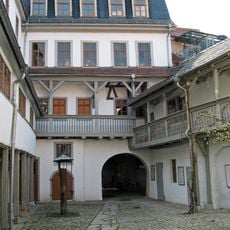
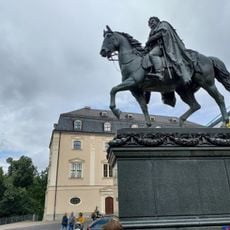
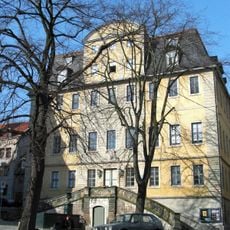
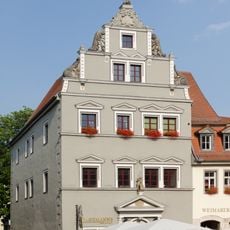
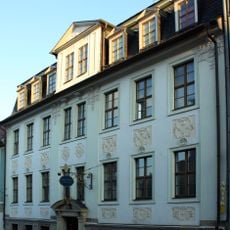
Herders residence, Baroque clergy house in central Weimar, Germany
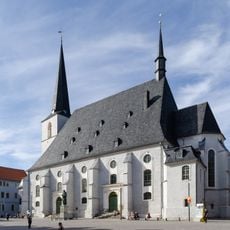
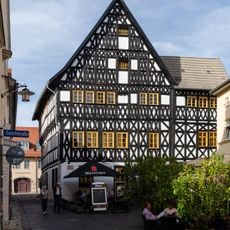
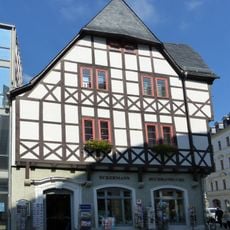
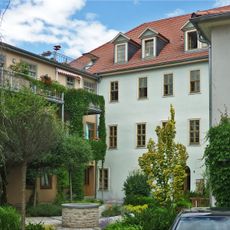
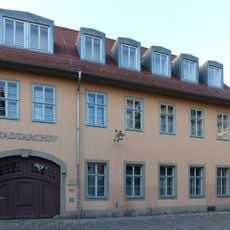
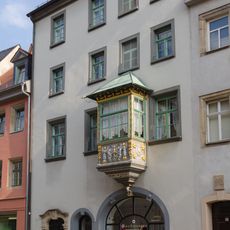
Herders residence is a three-story Baroque house near St. Peter and Paul Church in Weimar with characteristic German architectural features including a gabled roof and ornamental details. The ground floor now houses a church shop and café, while the upper floors continue to serve as official quarters for the superintendent.
The house was rebuilt in Baroque style in 1726/27. In 1776 Duke Carl August called Herder to Weimar on Goethe's recommendation; he lived here 27 years until his death on 18 December 1803. Since 1998 it has been one of Weimar's three Herder sites in the UNESCO World Heritage "Classical Weimar".
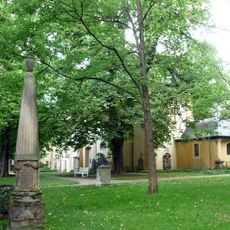
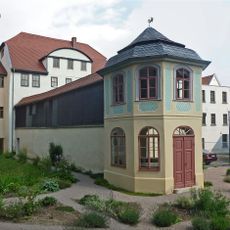
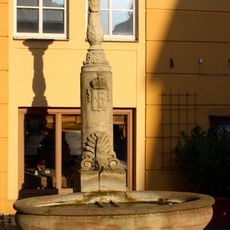
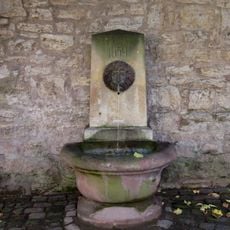
The garden behind the house was laid out to Herder's own design, with a fountain, flowers, fruit trees, berry bushes and vegetable beds. It was reconstructed in 1994 for his 250th birthday using his letters and poems and an old town plan, together with the garden house rebuilt in 1846. Unlike the house, the garden is open to visitors.
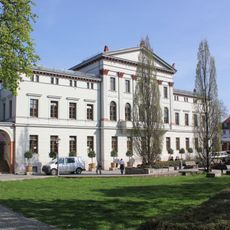
The house is easy to find near the city church and located in the central part of town. The ground floor café is open to the public, while the upper floors are typically accessible only during special tours or events.
The house is easy to miss, tucked in the shadow of the Herderkirche on an inconspicuous corner of Herderplatz. In 1850 Franz von Dingelstedt saw Herder's study and described a rickety writing desk by the window, a few quills and a well-used coffee tray, calling it almost poor to a modern eye.
The community of curious travelers
AroundUs brings together thousands of curated places, local tips, and hidden gems, enriched daily by 94,079 contributors worldwide.