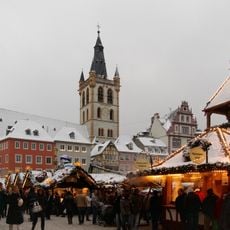
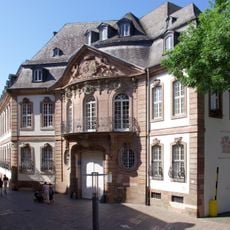
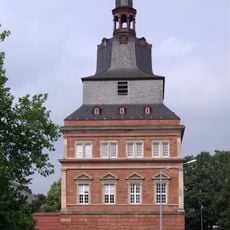
Marktkreuz Trier, Market cross in Trier, Germany
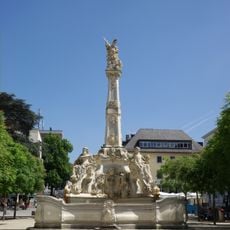
The Marktkreuz Trier is a 5.22 m monument on the Hauptmarkt, made of four parts. A 3.25 m Odenwald granite column, 47.5 cm wide at the base, rises from a three-tiered stone base. A double-conical sandstone capital with floral ornaments leads to a cross with the Lamb of God and a sundial.
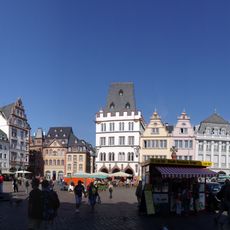
Archbishop Heinrich I founded Trier's central market around 958 in front of the west gate of the cathedral immunity, using market rights granted by King Otto I. He had the market cross erected as a symbol of market peace and of his authority over the city. The granite column is probably late Roman, from the 4th century AD; a Carolingian capital carries the Ottonian cross. The cross is first documented in 1261.
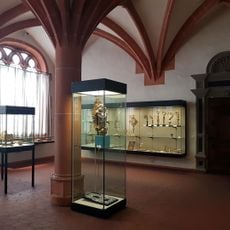
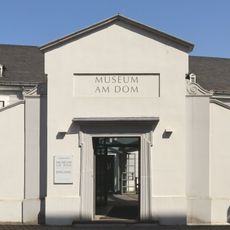
The cross's east side bears an inscription naming the year 958, the founder Archbishop Heinrich I, and a restoration marked "RENOUATUM 1724". The west side shows the Lamb of God with a victory banner, while the north arm carries a relief of Saint Peter and the south arm a sundial. The original capital and cross top have been kept in the Simeonstift city museum since 1964.
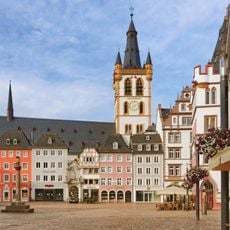
The original stone components are preserved in the Simeonsstift Museum, while an exact replica stands at the historical location on the marketplace. Visitors can view the monument from multiple angles on the active market square throughout the day.
The cross was first documented in 1261, and historian Richard Laufner believed it later served as a pillory. Holes chiselled into the stone after its erection are said to have held chains with foot shackles and neck rings. The cross top with its capital has been kept in the Simeonstift city museum since 1964; the piece on the square is a sandstone replica from 1988.
The community of curious travelers
AroundUs brings together thousands of curated places, local tips, and hidden gems, enriched daily by 93,180 contributors worldwide.