Georgsbrunnen, Water well at Kornmarkt, Trier, Germany
Georgsbrunnen is a Rococo fountain on Kornmarkt in Trier, built in 1750–1751 to plans by court architect Johannes Seiz. Its spire rises about eleven meters and carries figures of Saint George and the four seasons. The numerous cartouches on the fountain are now empty; they probably once held painted coats of arms of Trier councillors.
The fountain was built between 1750 and 1751 to plans by court architect Johannes Seiz, who also designed the Electoral Palace, in honour of Elector Franz Georg von Schönborn. Until the 19th century it drew its water, like the Petrusbrunnen on the Hauptmarkt, from the Heiligkreuzer Daufborn, now called Herrenbrünchen. Heavily damaged in World War II air raids, it was largely reconstructed after the war and moved to its present spot; it was restored in 2003 during the remaking of Kornmarkt.
The empty cartouches on the fountain probably once carried painted coats of arms of Trier's councillors. The fountain was fed, like the Petrusbrunnen on the Hauptmarkt, by the Heiligkreuzer Daufborn, now called Herrenbrünnchen, until the 19th century. An iron grille once surrounded it to keep the water clean, removed in the early 20th century.
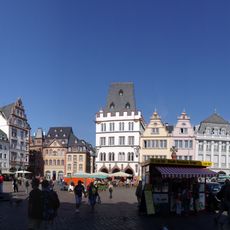
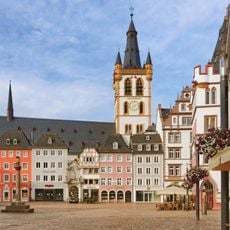
The fountain stands on Kornmarkt in Trier's Altstadt, in the Mitte/Gartenfeld district. It was moved to its present spot after World War II and restored in 2003 during the reworking of the square; a return to the original site was considered then but dropped for cost reasons and because the post-war buildings there would have worked against it.
Before World War II, the fountain stood in a different location further east on the square, directly in front of the old town hall that was later destroyed. After the war, it was moved to its current position to create a new focal point for the square.
The community of curious travelers
AroundUs brings together thousands of curated places, local tips, and hidden gems, enriched daily by 93,316 contributors worldwide.