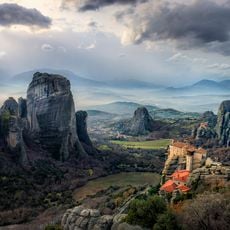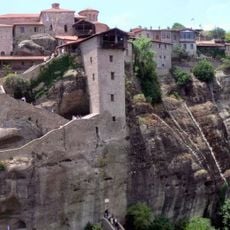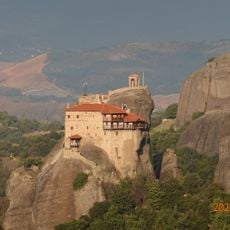
Varlaam monastery, Greek Orthodox monastery in Meteora, Greece
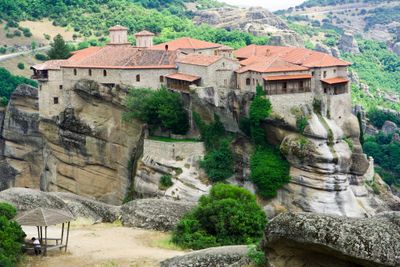
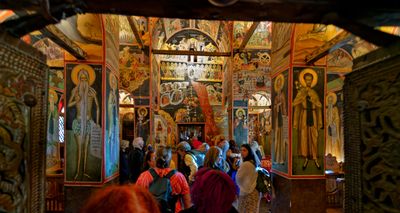
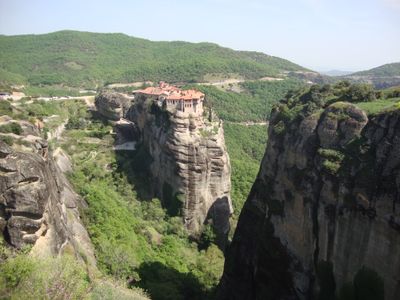
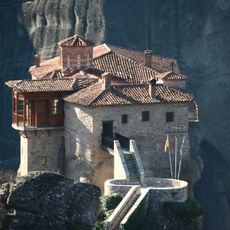
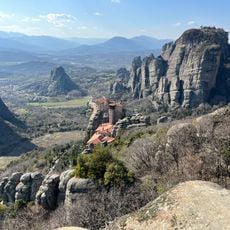
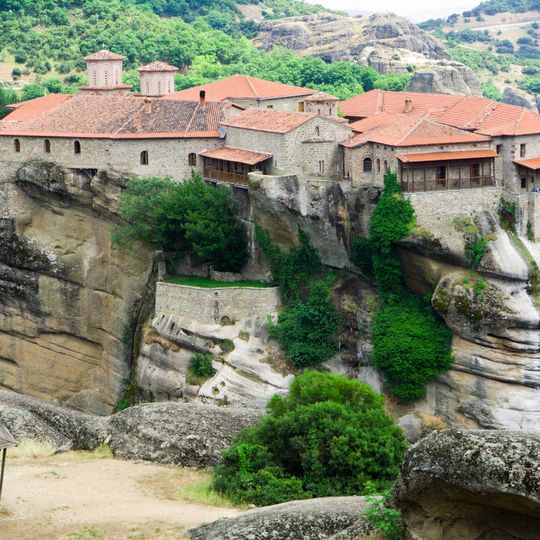
The Monastery of Varlaam stands on a rock 373 metres above the Pineios Valley floor near Kalambaka. Its light grey stone walls and reddish-brown tiled roofs sit behind a low stone wall enclosing a small terrace on the rock. A tall square tower rises on the left, next to a long roofed building and a section with a wooden balcony. The katholikon, dedicated to All Saints, is a cross-in-square church of Athonite type built in 1541, its interior covered in frescoes painted in 1548, 1566 and around 1780.
The monastery was founded in 1517 by two brothers who settled on an abandoned rock that had once sheltered a hermit around 1350. The founders built the initial church, establishing a spiritual center that would serve the region for centuries.
The monastery is also called Moni ton Agion Panton, after its katholikon dedicated to All Saints. That church was built in 1541 in the Athonite cross-in-square type, and its frescoes were painted in three phases: by Frangos Katelanos in 1548, by Georgios and Frangos Kontaris in 1566, and again around 1780–1782 according to a founder's inscription. The monastery keeps an important archive.
Visitors should dress appropriately, as women are expected to wear long skirts or loose pants with covered shoulders. The ascent requires climbing numerous steps carved into the rock, so sturdy footwear and time for rest breaks are advisable.
The monastery takes its name from the hermit Varlaam, who settled on the rock in the 14th century; the present foundation was organised in the early 16th century by the brothers Nektarios and Theophanes Apsaras from Epirus. They renovated the chapel of the Three Hierarchs in 1518, and the tower of the vrizoni was built in 1536. The katholikon, dedicated to All Saints, dates from 1541.
The community of curious travelers
AroundUs brings together thousands of curated places, local tips, and hidden gems, enriched daily by 92,842 contributors worldwide.