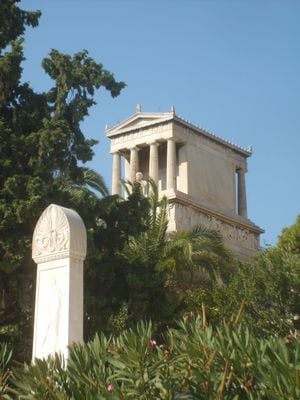
Schliemann Mausoleum, Greek Revival mausoleum in the First Cemetery of Athens, Greece
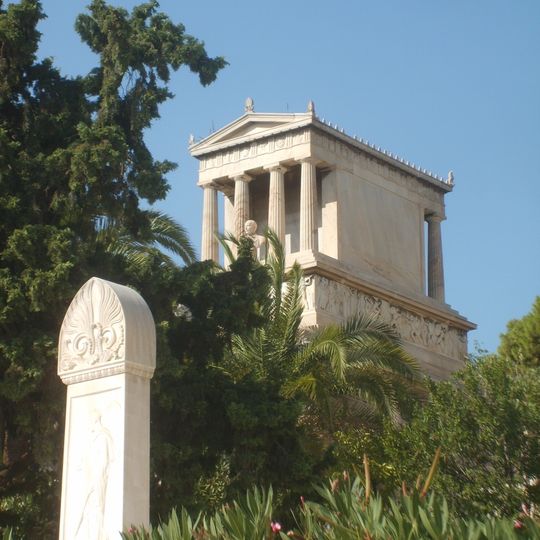
The Schliemann Mausoleum is an eight-metre-high tomb on the First Cemetery of Athens, built of a massive rusticated base holding the burial chamber and a stepped, frieze-decorated pedestal. On the pedestal stands a Doric amphiprostylos modelled on the temple of Athena Nike, with a bust of Schliemann between the columns. The architrave of the west side reads "To the Hero Schliemann".
Archaeologist Heinrich Schliemann, known for excavating Troy and Mycenae, commissioned architect Ernst Ziller to design this structure, completed in 1892. The monument was built during a period when archaeological discoveries captivated Europe and brought classical antiquity back into public interest.
The mausoleum blends Greek architectural forms with symbols of Schliemann's passion for the ancient world. The marble reliefs display a mix of mythological scenes and depictions of scholarly work, making his connection to classical civilization visible to visitors.
The mausoleum stands at the highest point of the First Cemetery of Athens, dominating the entrance area, so it is seen first on arrival. The burial chamber lies in the rusticated base; the Doric columned structure with Schliemann's bust rises above it. Look up at the west architrave for the Greek inscription to the hero.
The north frieze shows idealized scenes of Schliemann's excavations and depicts Schliemann and his wife Sophia, so the couple appears on their own tomb. The metopes reproduce finds from his digs, as Schliemann had requested.
The community of curious travelers
AroundUs brings together thousands of curated places, local tips, and hidden gems, enriched daily by 93,119 contributors worldwide.