Akrotiri, Archaeological site in Santorini, Greece
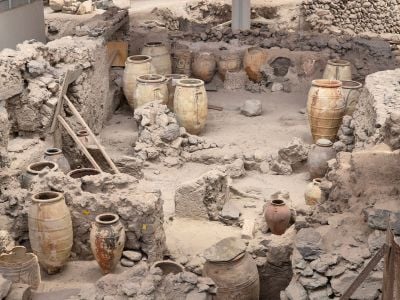
Akrotiri is an excavated ancient city on Santorini in Greece that lay buried under volcanic ash. The ruins contain buildings with several floors, drainage systems, detailed wall paintings, and pottery that remained preserved under the ash for centuries.
The settlement developed until around 1600 before the common era, when a massive volcanic eruption buried the entire city under thick layers of ash. The sudden eruption preserved the buildings and objects in the state they were left behind.
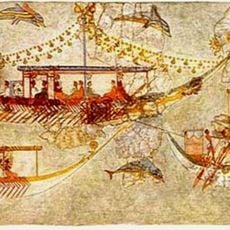
The site's name comes from the nearby village of Akrotiri; the settlement's ancient name is unknown. The wall paintings, including a ship fresco with rowers under a canopy and a dolphin below, are now kept in the Museum of Prehistoric Thera, away from the ruins. No human skeletons were found, indicating an orderly evacuation before the eruption.
The site is protected by a modern roof that provides shade and shelters the ruins from weather. Guided walks help understand the layout, and paths lead through the excavated streets and buildings.
The excavations revealed a system of water pipes running through walls and under streets, which was exceptional for the Bronze Age. This engineering skill allowed residents to bring water to upper floors and dispose of waste.
The community of curious travelers
AroundUs brings together thousands of curated places, local tips, and hidden gems, enriched daily by 93,628 contributors worldwide.