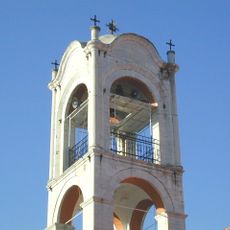
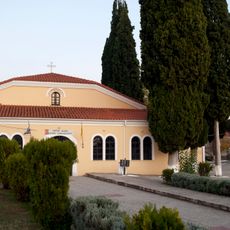
Archaeological Museum of Drama, Archaeological museum in Drama, Greece.
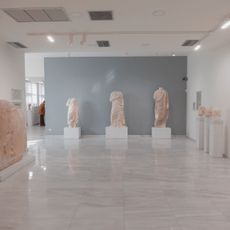
The Archaeological Museum of Drama is a building that collects and displays finds from different time periods, ranging from early stone tools to objects from later centuries. The exhibition spreads across several rooms and features pottery, metalwork, and stone sculptures from ancient times.
The museum preserves stone tools and bones discovered in a cave near the Angitis River, showing that people lived in this area in very ancient times. Later, ancient settlements developed here, and objects from those communities are also part of the collection.
The museum keeps a marble bust of Dionysos, the earliest evidence of his cult in the wider area, and a hoard of coins of Philip II found at Potami. A grave stela from Grammeni records the military successes of the Roman legionary Tiberius Claudius Maximus. In the covered atrium stands the red-figure krater of Prosotsani, a vase of 380–370 BC found almost intact in 2014 in a cist grave east of the village.
The museum is open most days of the week, but one day is typically closed, so it helps to check the schedule before visiting. The rooms are connected and laid out clearly, making it easy to explore everything.
The stone sundial with engraved hours from the Palaiohori area is dated to 1069 AD, not the 11th century BC. It is among the few Byzantine monuments in the collection, alongside pottery, coins and jewellery from Drama, Adriani and Ksiropotamos.
The community of curious travelers
AroundUs brings together thousands of curated places, local tips, and hidden gems, enriched daily by 94,388 contributors worldwide.