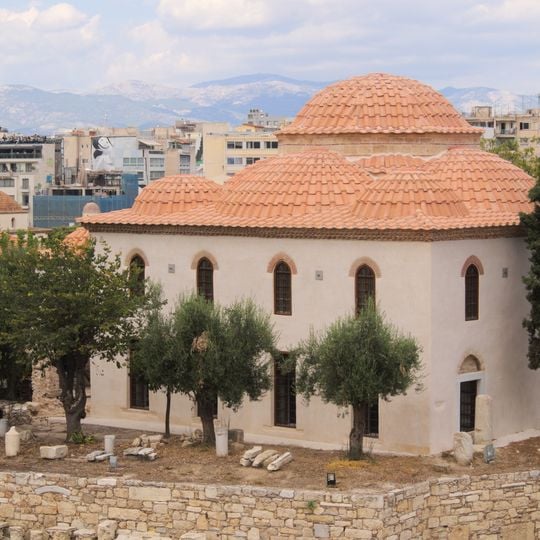
Fethiye Mosque, Athens, Ottoman mosque in Roman Agora, Greece
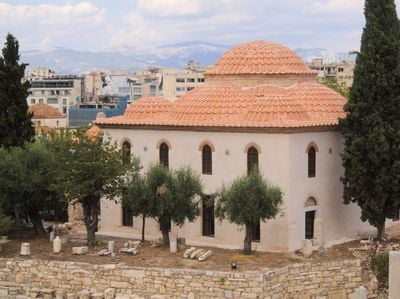
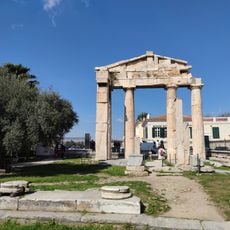
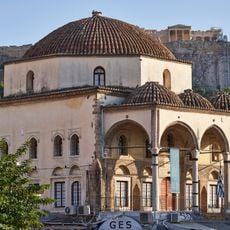
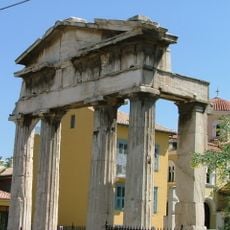
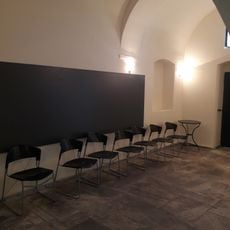
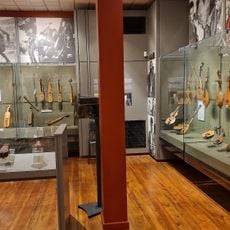
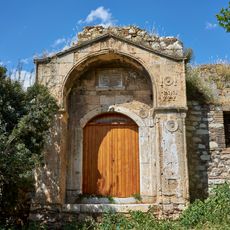
Fethiye Mosque is a building with a large central dome and stone walls situated within the Roman Agora archaeological complex. It stands on foundations of an earlier structure and now serves as an exhibition space for visitors exploring the site.
A Christian basilica of the 8th or 9th century stood here before the church was converted into a mosque in 1456/58, when Sultan Mehmed the Conqueror visited Athens. The present building replaced it between 1668 and 1670. After Greek independence it served as a barracks, a military prison and a military bakery, and from the early 20th century it stored finds from the Agora and Acropolis excavations.
Ottoman-era Athenians knew it as the "Wheatmarket Mosque" (Tzami tou Staropazrou), a name tied to the grain trade of the surrounding market. The Venetians briefly turned it into a Catholic church dedicated to Dionysius the Areopagite during their occupation of Athens in 1687–1688. Since 2017 it has served as a venue for cultural exhibitions.
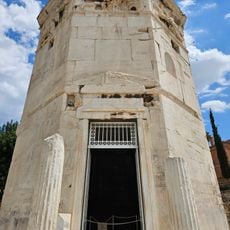
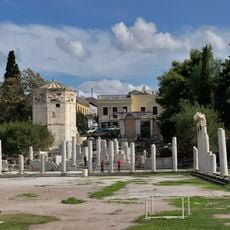
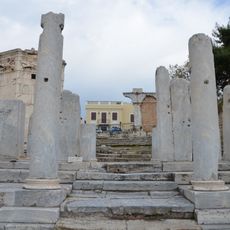
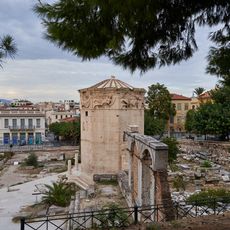
The mosque stands on the northern side of the Roman Agora, close to the Tower of the Winds, and is reached from the Agora grounds. It reopened to the public in 2017 after restoration, so access is as a cultural exhibition space rather than a place of worship.
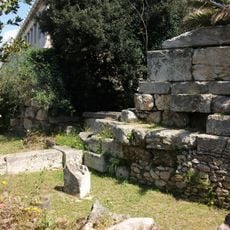
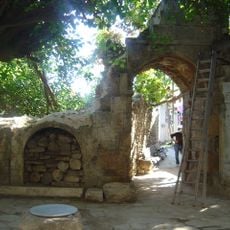
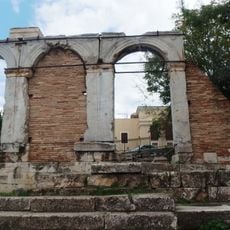
The mosque was built in 1668–1670 on the ruins of a middle Byzantine basilica, and a fragment of the mihrab from the earlier mosque converted in 1456/58 still survives. Because building material was plentiful at the time, the structure incorporates architectural members from classical and Byzantine times, among them Ionic column capitals of the ancient era.
The community of curious travelers
AroundUs brings together thousands of curated places, local tips, and hidden gems, enriched daily by 92,823 contributors worldwide.