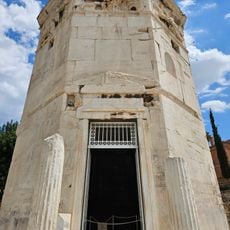
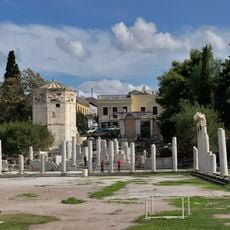
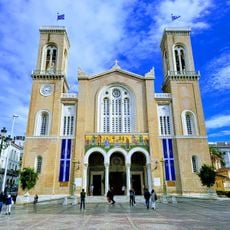
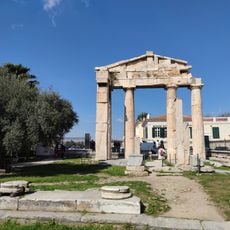
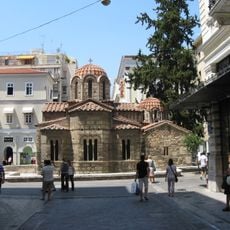
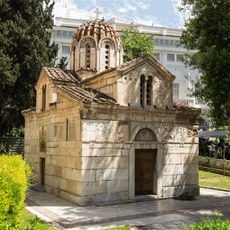
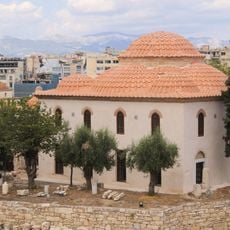
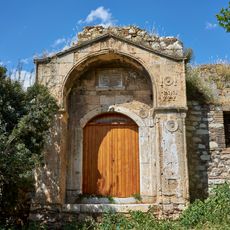
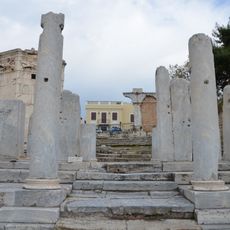
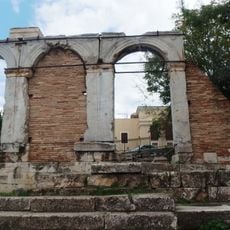
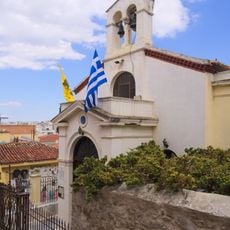
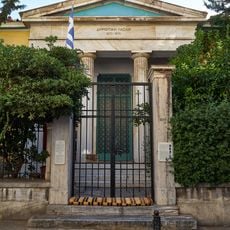
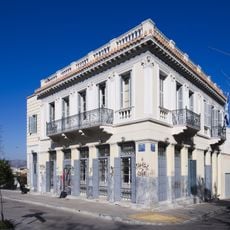
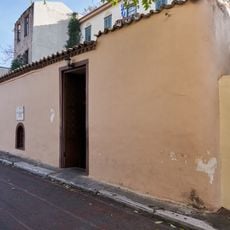
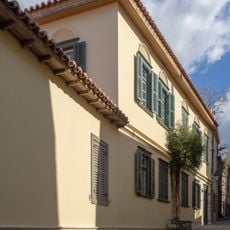
Pantheon of Athens, Archaeological site of a Greek sanctuary in the Roman Agora area, Athens, Greece.
The Pantheon of Athens is an ancient religious site in the Plaka district whose exact location remains uncertain today. The remains show features typical of Greek sanctuaries, with foundations and fragments scattered beneath the modern streets.
The Pantheon was built around 130 AD under Emperor Hadrian, not in the classical period. It is known from written sources such as Pausanias, but its exact location remains unknown. It may have stood east of the Roman Agora and Hadrian's Library, where remains of a large three-aisled basilica were found; that building has also been identified as the Panhellenion.
The temple's name links it to all the gods, and Pausanias is the written source that records it. Hadrian founded the Panhellenion, a league of Greek cities, and some scholars identify the large three-aisled basilica found east of the Roman Agora with that institution rather than with the Pantheon.
The exact position of these ruins is not clearly marked, but it lies somewhere in Plaka beneath modern houses and streets. Visitors should expect uneven ground and will find only partially preserved remains with informational signage.
The exact location of this ancient site remains a mystery today because historical sources and archaeological evidence do not always align. Researchers continue to study scattered pottery fragments and stone pieces to uncover where the sanctuary truly stood.
The community of curious travelers
AroundUs brings together thousands of curated places, local tips, and hidden gems, enriched daily by 92,825 contributors worldwide.