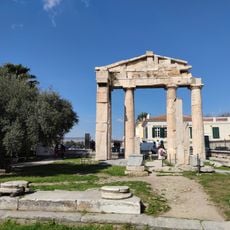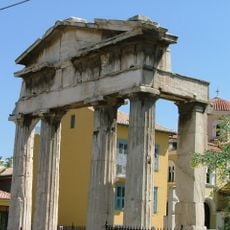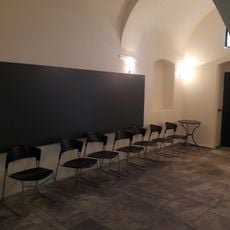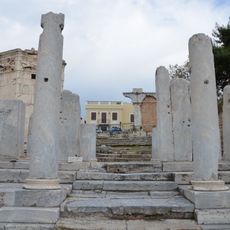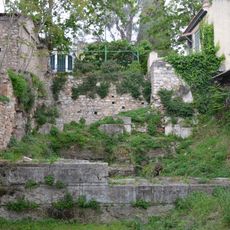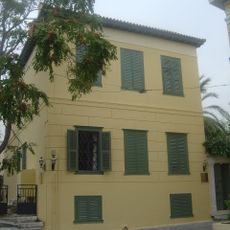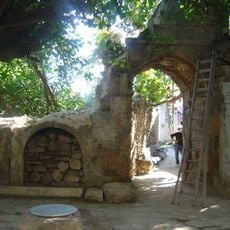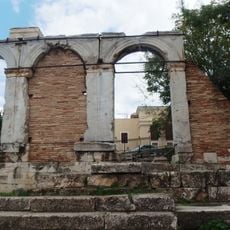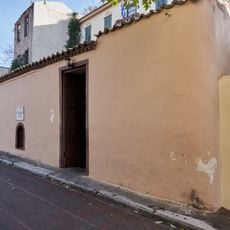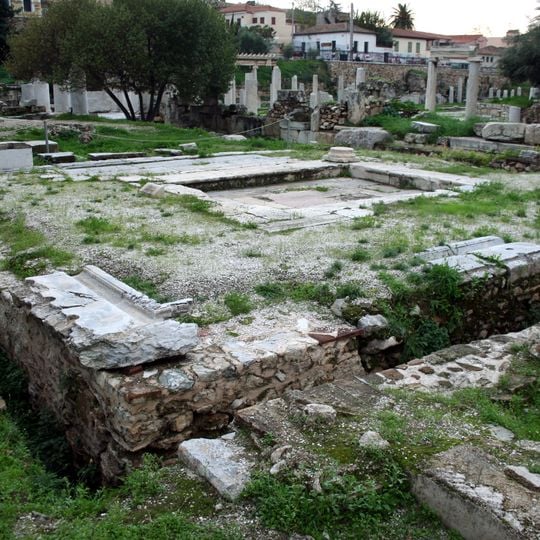
Vespasianae of Athens, Ancient public latrine in Roman Agora, Greece
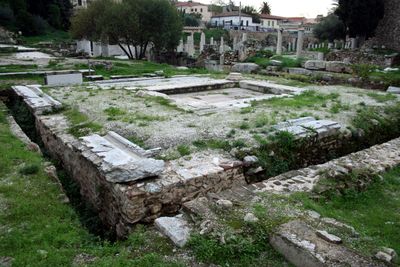
The Vespasianae is an ancient public latrine in the Roman Agora featuring marble seating positioned above water channels for waste disposal. The structure demonstrates the engineering knowledge Romans applied to urban sanitation, with running water continuously flowing beneath the seats.
This public facility was built during Emperor Vespasian's reign in the first century AD as part of Roman development in Athens. The construction reflects how the Romans brought their urban infrastructure standards to Greek cities they controlled.
The latrine served as a social meeting place where people from different backgrounds encountered one another in a casual setting. This shared space reveals how public facilities brought together members of society who might not otherwise interact in such an informal way.
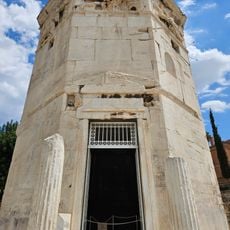
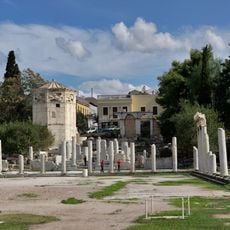
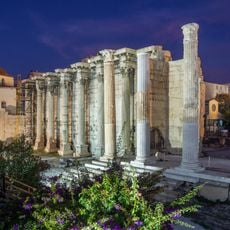
The site is located within the Roman Agora archaeological complex and can be visited as part of the wider excavation area. Plan to explore the remains alongside other Roman structures nearby to understand the layout of the ancient city.
The latrine featured a continuous water flow system that ran beneath the seating to automatically flush away waste in a way that was unusual for its era. This engineering solution shows how Romans solved practical problems with the resources they had available.
The community of curious travelers
AroundUs brings together thousands of curated places, local tips, and hidden gems, enriched daily by 91,172 contributors worldwide.