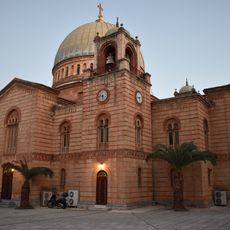
Panagia Trypiti, Orthodox church in Aigio, Greece
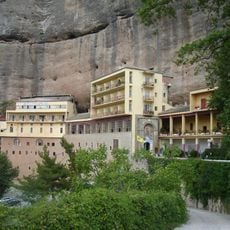
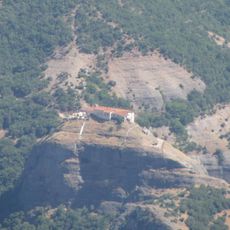
Panagia Trypiti is an Orthodox church perched on a steep cliff about 30 meters above sea level near the port of Aigio in the Peloponnese. The building overlooks the coastline and sits within natural rock formations that define its dramatic setting.
Around 1550 a shipwrecked voyager saw a light near the shore and found an icon of the Virgin in a hole in the rock. He funded a small chapel on the spot and lived as a hermit in a cave behind it. The church was later expanded in the 19th century, and in 1970 the Holy Synod of Greece recognized it as a nationwide pilgrimage shrine.
The main celebration falls on Bright Friday, the Friday after Easter, when thousands of pilgrims come to Aigio and the icon is carried in procession through the streets. The day is an official religious holiday, recognised by royal decree on 8 May 1933. The name Trypiti comes from the Greek tripa, meaning hole, after the cave where the icon was found.
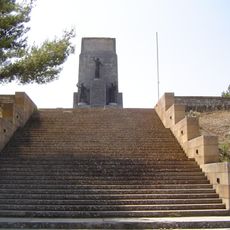
The church stands about 30 metres above sea level, reached either by a marble staircase of 150 steps built in 1870 to a design by engineer Angelos Korizis, or by a path through cypress groves. Since the 2019–2023 restoration there are external elevators and a disabled-access lift. The shrine was closed to visitors during those works.
The marble slab at the entrance carries the inscription "After the fear of God comes love". Inside, the icon of the Virgin stands to the right of the altar, within the cave itself, and a wooden reliquary holds relics of the apostle Luke, Saint Eleftherios and the martyr Paraskevi of Rome.
The community of curious travelers
AroundUs brings together thousands of curated places, local tips, and hidden gems, enriched daily by 93,630 contributors worldwide.