Durbalı Sultan Tekke, Bektashi tekke in Ano Asprogeia, Farsala, Greece
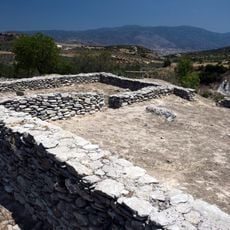
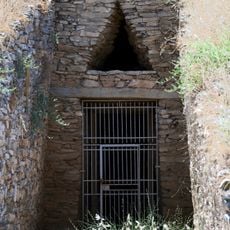
The Durbalı Sultan Tekke is an Ottoman-era khanqah in Asprogeia situated on a mountain spur overlooking the Thessalian plain. The complex comprises residential buildings, a cemetery with two türbes, and numerous tombs arranged as a unified religious community space.
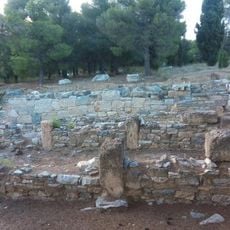
Founded by the Alevi dervish Durbalı, who arrived from Konya around 1492 and received a license to build a tekke after military service in Thessaly. It was built on the ruins of a 10th-century Byzantine monastery of St. George, whose fresco survives. Some scholars, noting tomb dates and architecture, date the foundation to the second half of the 18th century. In about 1770 it was occupied by the Mevlevi order.
The tekke preserves wall paintings of Imam Ali and Haji Bektash Veli, and a fresco of Saint George, a saint also venerated by Sufis, survives from the earlier Byzantine monastery. Each year on 1 May the tekke festival brings dervishes from Albania and Turkey, who pray, honour the tombs of former dervishes and hold picnics outside the walls.
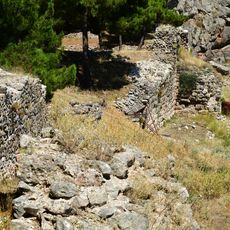
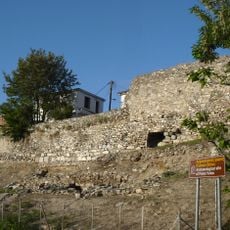
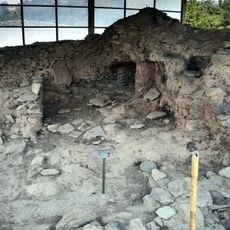
The complex sits on a mountain spur above the Thessalian plain, entered past a spring at the gate. Inside the walls, the cemetery with its two türbes lies to the south and the ruined residential area to the north. Reconstruction is banned by the Greek state, so buildings remain unsafe to enter; the mosque and dervish tombs are better preserved. Each 1 May dervishes from Albania and Turkey gather here.
The complex holds two türbes and 33 tombs; the western türbe, about 6×7×7.5 m, is the oldest and was built of irregular ashlar blocks framed with bricks, with Byzantine spolia reused in its walls. Some scholars date it to the 16th century.
The community of curious travelers
AroundUs brings together thousands of curated places, local tips, and hidden gems, enriched daily by 94,532 contributors worldwide.