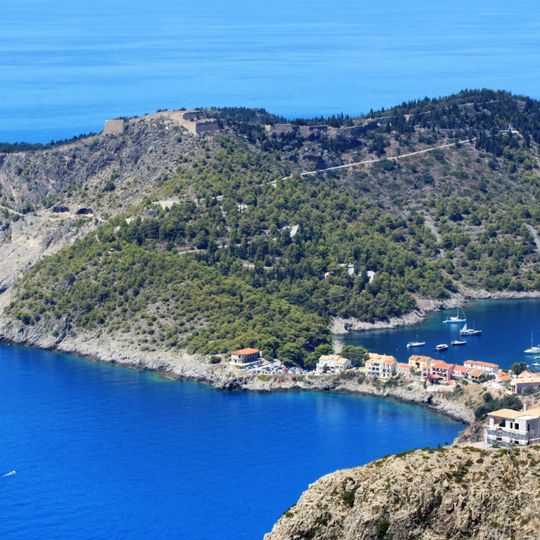
Assos Castle, Venetian fortification on Cephalonia island, Greece
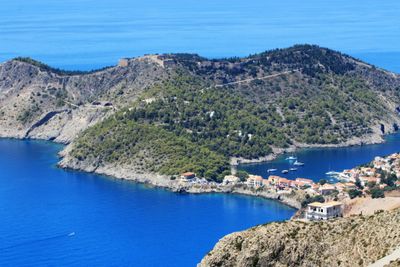
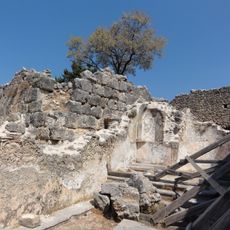
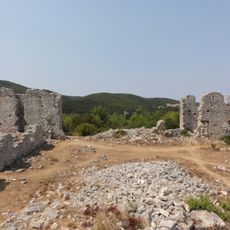
Assos Castle is a Venetian fortification on a 170-metre rocky hill that covers the whole peninsula opposite the village of Assos, on Kefalonia. A 2,000-metre wall encloses 44,000 square metres, and the preserved sections are mainly stretches of wall and an arched gate bearing the Lion of Saint Mark.
In 1584 Kefalonian nobles petitioned the Venetian Senate for a new fortress, as St George's Castle could not defend the island against Ottoman attack and pirate raids. Building began in 1593 under Ambrosius Cornelius and was completed by 1596 to the designs of Marino Gentillini, who settled on the island and entered the Libro d'Oro. Assos became the capital of northern Kefalonia and remained the seat of the Venetian provveditore until the Republic fell in 1797.
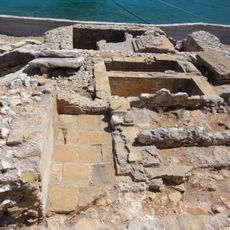
At the entrance gate, the Lion of Saint Mark is carved in stone, marking the Venetian authority that once ruled this part of Greece. Inside, the ruins of a Catholic chapel stand as a reminder of how the island was governed for generations.
Two routes start from the neck of the peninsula: a 2 km paved walkway to the east main gate and an 800 m path to the south auxiliary entrance, Portelo. The site is open daily with no entry fee. The terrain inside is uneven, so wear sturdy shoes.
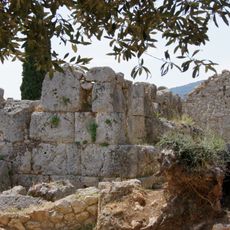
After 1920 the fortress was turned into a prison and later held political detainees after the Second World War. Some of the interior structures visible today date from its years as a detention facility rather than from its original Venetian construction.
The community of curious travelers
AroundUs brings together thousands of curated places, local tips, and hidden gems, enriched daily by 92,981 contributors worldwide.