Karababa, 17th-century fortress in Chalkis, Greece
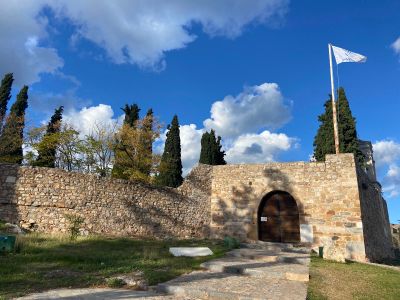
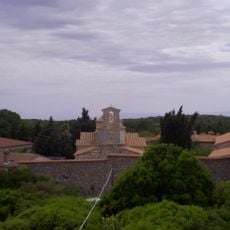
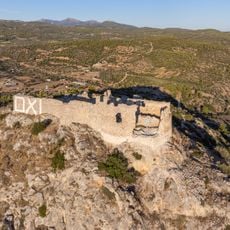
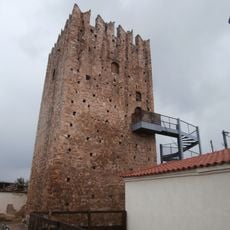
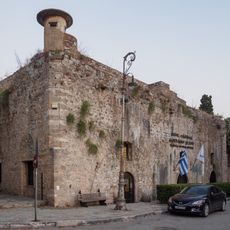
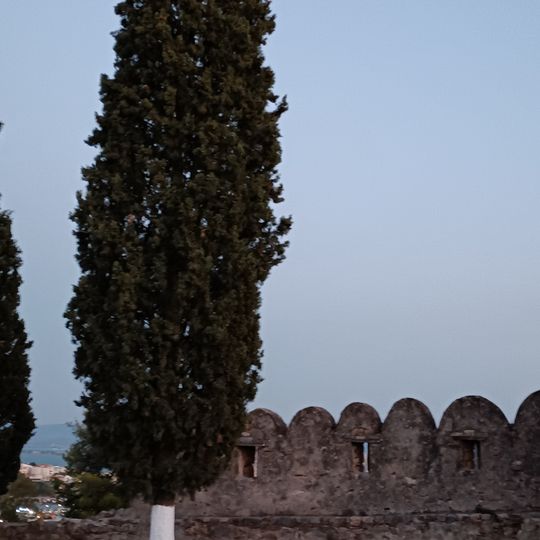
Karababa is a fortress built in 1684 on the Foúrka hill above Chalkis, on an east-west axis 240 metres long and 54 metres wide. Its walls stand 6 metres high, with three bastions, a large tower and an outer wall on the north side; the hexagonal bastion faces Chalkis. The only gate is on the southeast side, and the single building inside is the church of the Prophet Elijah, built in 1895.
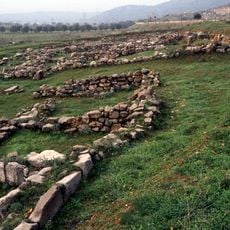
The present fortress was built in 1684 to plans by the Venetian Gerolimo Galopo for the Ottoman Empire. In antiquity the city of Kanithos stood on this hill, probably fortified in Roman times, but no fortress survived from the Byzantine and Venetian periods. Francesco Morosini besieged it without success in 1688, and it stayed in Ottoman hands until passing to the Greek state in 1833.
The name Karababa, Turkish for "black father", is popularly linked to an Ottoman commander, though the sources do not confirm this. Inside the fortress, the only surviving building is the church of the Prophet Elijah, built in 1895. Two 19th-century Russian cannons stand on the ramparts of the eastern bastion, and rifle loopholes are preserved in the north wall.
The fortress is easiest to access through its southeast entrance, where you can explore the preserved walls and examine two Russian cannons from the 1800s. The elevated location provides good views but requires careful footing on uneven paths.
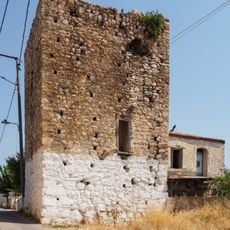
The seven-sided tower at the highest point of Fourka hill has walls 3.5 metres thick on the outside and a narrow entrance. Inside it held a cistern supplying the fortress. Its inner corridor now serves as an exhibition space for reliefs and architectural members from the early Christian, Byzantine, Venetian and Ottoman periods.
The community of curious travelers
AroundUs brings together thousands of curated places, local tips, and hidden gems, enriched daily by 94,569 contributors worldwide.