Moria Aqueduct, Roman archaeological site in Moria, Lesbos, Greece
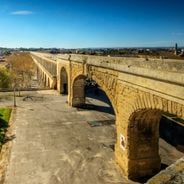
Moria Aqueduct is a Roman aqueduct on Lesbos, about 26 km long, built around 200–300 AD to carry water from a lake north of Mount Olympus to Mytilene. Its best-preserved section stands about 600 m south-southwest of Moria village: roughly 170 m of arcades resting on 17 piers of local grey marble. Other stretches survive near Lámpou Mýloi, some 15 km west of Mytilene.
The structure was built in the late second or early third century AD as a water transport system for the city of Mytilene. This ancient infrastructure reveals how vital aqueducts were to Roman settlements.
The name comes from the village of Moria, near which the best-preserved stretch stands, about 600 m south-southwest of the village and 7 km northwest of Mytilene. The aqueduct is also called the Mytilene aqueduct, after the city it supplied. Its water fed the city's fountains and baths.
The best-preserved stretch, about 170 m with 17 piers, lies roughly 600 m south-southwest of Moria village and about 7 km northwest of Mytilene. Further remains stand near Lámpou Mýloi, some 15 km west of the city. Restoration work has been under way since 1995, so parts of the structure may be fenced or scaffolded.
The aqueduct drew its water from a lake later drained, known today as Megáli Límni, on the northern side of Mount Olympus near Agiasos. Along its 26-kilometre route it also collected water from other springs. It is estimated to have supplied Mytilene with about 127,000 cubic metres of water daily, feeding the city's fountains and baths.
The community of curious travelers
AroundUs brings together thousands of curated places, local tips, and hidden gems, enriched daily by 93,020 contributors worldwide.