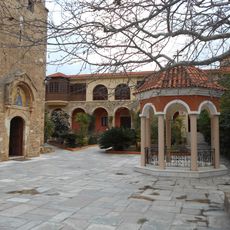
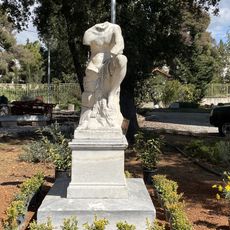
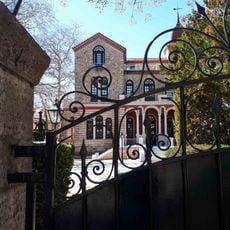
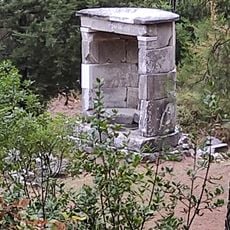
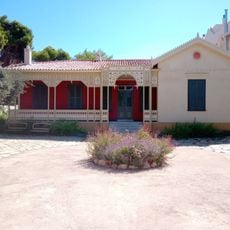
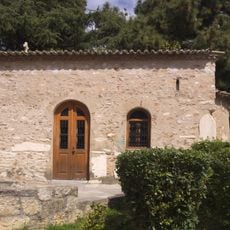
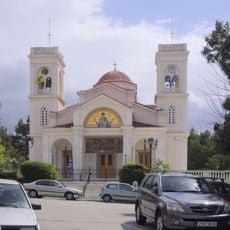
Rododafni kastello, Protected chateau in Penteli, Greece.
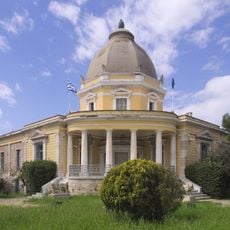
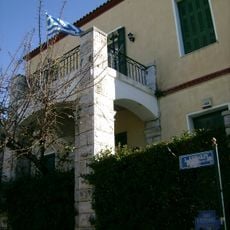
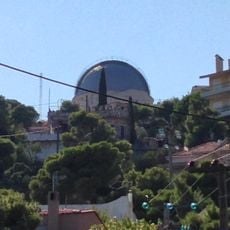
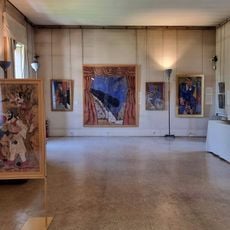
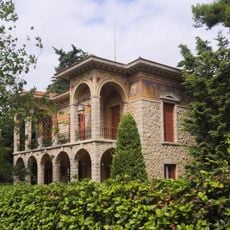
Rododafni kastello is a neo-Gothic palace on Lord Byron street, on the slope of Mount Pentelicus in Penteli. Construction began in 1840 using local Penteli marble, and the building stands on the Koufos hill. Since 1961 it has housed a municipal library and cultural centre, with a courtyard used for summer events.
Sophie de Marbois-Lebrun, Duchess of Plaisance, bought 1,738 stremmata at Penteli in 1840 for 7,512 drachmas after the Penteli Monastery demanded a price she could not meet, and the Greek government under Kolettis intervened. Construction of the castle began that year; the French architect André Couchaud was its main designer, while Stamatios Kleanthis worked on the auxiliary buildings. The Duchess died in 1854 before completion, and her nephew later sold the estate to the Greek state.
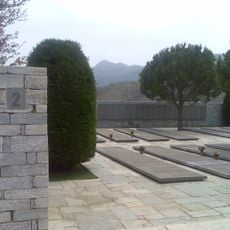
The palace's name means Rosetree castle. It was built as a summer residence and as a resting place for the remains of the Duchess's daughter, Caroline-Elisa, who died in 1837. The neo-gothic design was long credited to Stamatios Kleanthis; historian Olga Fountoulakis showed the French architect André Couchaud was the main designer, with Kleanthis involved in the auxiliary buildings.
The castle stands on Lord Byron street on the slope of Mount Pentelicus, above Penteli. It belongs to the Municipality of Penteli, which runs it as a cultural centre and library; the grounds host cultural events in summer for up to 1,000 people. Access is tied to these events and library opening, so check locally before climbing up.
The French writer Edmond About, a friend of the Duchess, recorded the legend that she left her Penteli buildings without roofs or windows out of fear that finishing one would kill her. The story explains why Rododafni stood roofless for decades before restoration began in 1959.
The community of curious travelers
AroundUs brings together thousands of curated places, local tips, and hidden gems, enriched daily by 93,276 contributors worldwide.