Kerkis, Summit in Samos, Greece
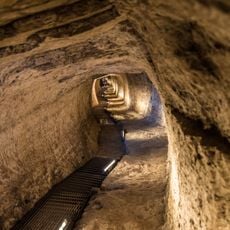
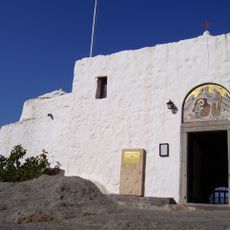
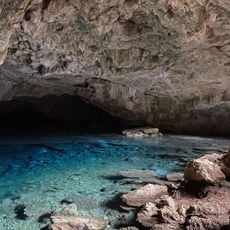
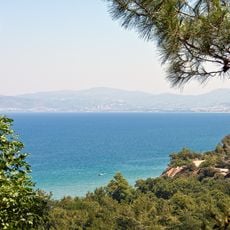
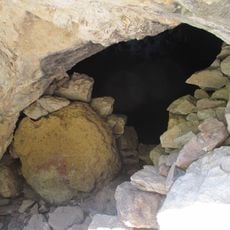
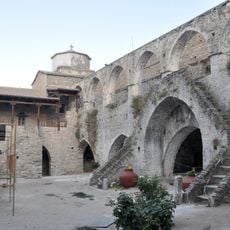
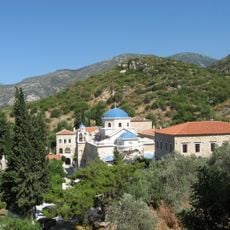
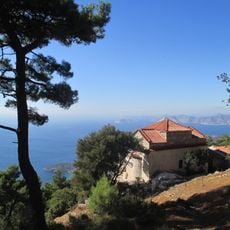
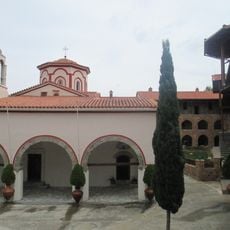
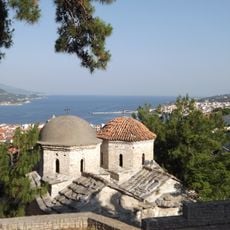
Kerkis forms the bulk of western Samos, a marble massif whose whitish exposed cliffs give the mountain its pale colour. Its highest peak, Vigla, reaches 1,433 m, the second-highest in the East Aegean after Fengari on Samothrace. Small monasteries and numerous caves, including the Cave of Pythagoras on the eastern slope, lie on its flanks.
Kerkis takes its name from Kerketeus, the ancient form meaning "belonging to Circe". On its eastern slope lies the Cave of Pythagoras, where Pythagoras is said to have hidden from the tyrant Polycrates before going into exile in Italy. On 3 August 1989 an Olympic Airways aircraft flying from Thessaloniki crashed on the mountain, killing all 34 people aboard.
The name Kerkis, in both its ancient and modern forms, means roughly "belonging to Circe", the enchantress of Homer's Odyssey. On the eastern slope lies the Cave of Pythagoras, where Pythagoras is said to have hidden from the tyrant Polycrates before going into exile in Italy. Several small monasteries stand on the mountain's slopes.
The mountain has many springs, mostly on its northern side, and numerous caves, some accessible and some not. Several small monasteries sit on the slopes, and the Cave of Pythagoras lies on the eastern slope. The summit Vigla reaches 1,433 m, so plan the approach with the terrain and water sources in mind.
The plant species Consolida samia grows only in the mountain's limestone scree and is a botanical specialty of this island. While visitors may overlook these delicate flowers among the rocks, botanists recognize this location as a significant habitat.
The community of curious travelers
AroundUs brings together thousands of curated places, local tips, and hidden gems, enriched daily by 94,062 contributors worldwide.