Bedestan Thessaloniki, Ottoman bedesten in Thessaloniki, Greece
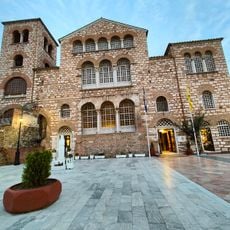
Bedestan Thessaloniki is a rectangular stone building from the Ottoman period located in central Thessaloniki, near Venizelou Street. It is divided into several sections covered by lead-lined domes resting on thick stone pillars, forming a fully enclosed covered market.
Built around 1455–1459 under Sultan Mehmed II, though some scholars date it to the late 15th or early 16th century, the bedesten was the covered market where valuables were sold, documents and assets kept, goods inspected and currency rates set. Before the 1917 fire that destroyed much of Thessaloniki it held 113 shops; exterior shops were added around the central hall afterwards. It is one of three Ottoman bedestens surviving in modern Greece, with Larissa and Serres.
The name comes from the Turkish bezesten, itself from Arabic bez, meaning fabric, a trace of the textile trade that gave the market its name. In Ottoman cities the bedesten was also where goods were inspected for quality and currency rates were set. Today the building houses various shops, and it is one of three Ottoman bedestens surviving in modern Greece, alongside those of Larissa and Serres.
The bedesten stands at the junction of Venizelou and Solomou streets, opposite the Alkazar and the old town hall, a short walk from the city centre. It is a working market, so the interior is entered through one of its four side entrances; expect shops around the central hall rather than a museum layout.
The bedesten is one of only three Ottoman bedestens still standing in modern Greece, alongside those of Larissa and Serres. Its six lead-covered domes rest on two central piers carrying seven double arches, and the 1980s–1990s works corrected a subsidence and a lean away from the vertical.
The community of curious travelers
AroundUs brings together thousands of curated places, local tips, and hidden gems, enriched daily by 94,023 contributors worldwide.