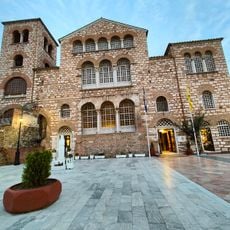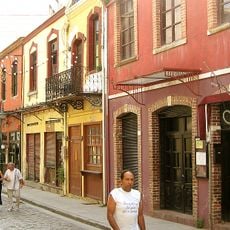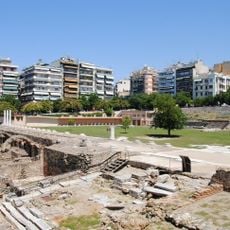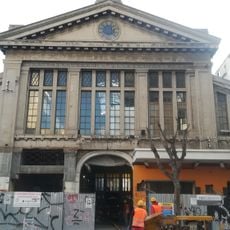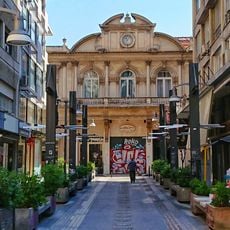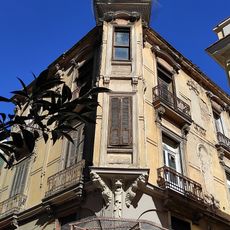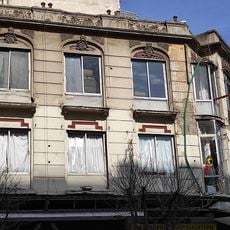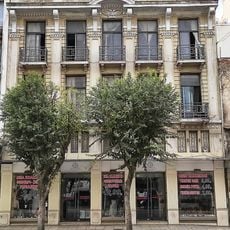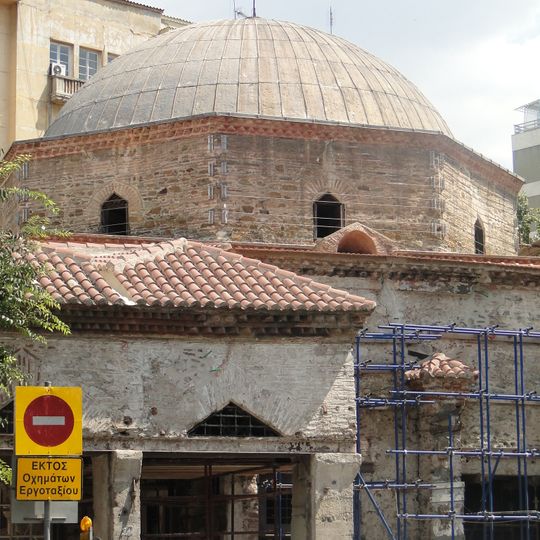
Hamza Bey Mosque, Ottoman mosque in Thessaloniki, Greece
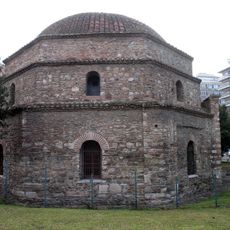
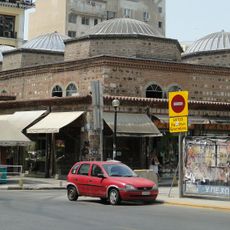
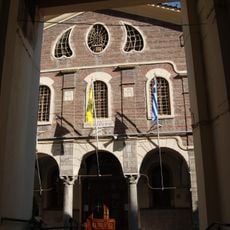
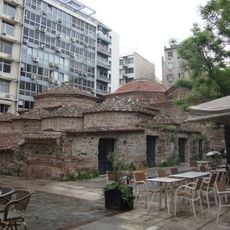
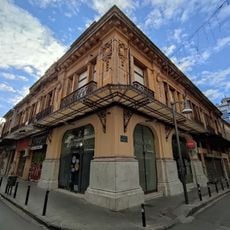
Hamza Bey Mosque stands at the corner of Egnatia and Venizelou streets, opposite the Bezesteni. Its walls mix bands of brick and stone, and its peristyle court holds twenty-two marble columns with fifteen early Christian capitals from the 5th–6th centuries. Inside are a gypsum stalactite decoration and wall paintings with plant and geometric motifs.
Built between 1467 and 1468 by Hafsa Hatun, daughter of Isa Bey Evrenosoğlu, the mosque was named after Hamza Bey, Beylerbey of Rumeli. Damaged by earthquakes and fires, it was rebuilt in 1620 by Kapı Mehmet Bey, when a madrasa was added. It served as a mosque until 1925, when the last Muslims left the city.
The building demonstrates the Ottoman presence that shaped Thessaloniki for centuries through its design and structure. It stands as a tangible reminder of the city's multilayered religious and social past.
The mosque stands at the junction of Egnatia and Venizelou streets, opposite the Bezesteni. It is a protected archaeological site under restoration since 2006, with completion announced for mid-2026, so parts may be closed off. Check access conditions before planning a visit.
After its conversion, the building became known as the Alkazar cinema, and this alternative name still echoes its transformed past. The second identity reveals how the space was completely repurposed following the historical upheaval.
The community of curious travelers
AroundUs brings together thousands of curated places, local tips, and hidden gems, enriched daily by 92,947 contributors worldwide.